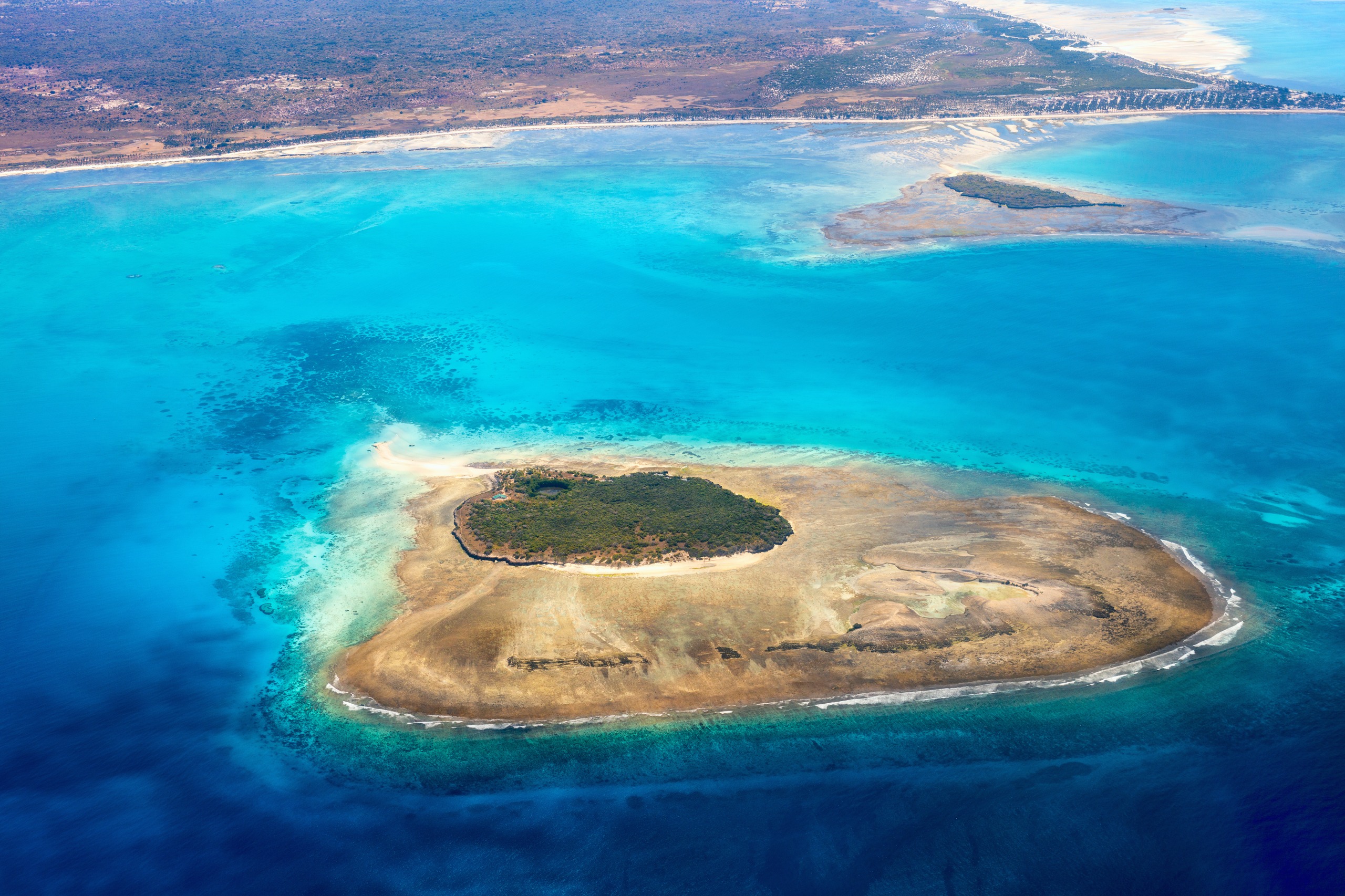
Machangulo Nature Reserve
On the Machangulo peninsula, within reach of Maputo, coastal forests, deserted beaches and a dugong-filled bay make up one of southern Mozambique's most remarkable protected areas.
Machangulo Nature Reserve occupies the peninsula of the same name in southern Mozambique, just tens of kilometres from Maputo. Wedged between Maputo Bay and the Indian Ocean, this strip of land preserves coastal forests, near-deserted beaches and rich marine floors. It is one of the few protected areas accessible from Mozambique's capital, prized for diving, dolphin watching and tranquility.
Practical information at a glance
- Access: boat crossing from Catembe or Ponta do Ouro; navigable track in 4×4 from Maputo via the Catembe bridge.
- Dress code: no particular clothing restrictions; pack light clothing and sun protection.
- Recommended duration: minimum one night to enjoy the beaches and marine activities.
What you'll see
The reserve is home to little-frequented white sand beaches, dense coastal forests and seagrass beds. The floor of Maputo Bay welcomes dugongs, dolphins and manta rays depending on the season. Sea turtles come ashore to nest on certain beaches between November and February. Coastal birdlife is also remarkable for ornithologists.
History and context
The Machangulo peninsula is part of the Maputo Bay buffer zone, designated a Ramsar site for its internationally important wetlands. The reserve was created to protect coastal ecosystems threatened by growing demographic pressure around Maputo. It plays a key role in the conservation of dugongs, a vulnerable species whose Maputo Bay population is one of the last significant ones in East Africa.
Highlights of your visit
Dugong and dolphin watching
Maputo Bay is one of the few places in the world where you can observe dugongs in the wild. Boat trips allow you to approach these discreet marine mammals, often accompanied by dolphins. The most favourable period extends from May to November, outside the rainy season.
Diving and snorkelling
The coral reefs off the peninsula offer good visibility and varied fauna: tropical fish, rays, turtles. Conditions are better between May and October, when the sea is calmer and visibility greater.
Secluded beaches
Several beaches on the peninsula remain accessible only by 4×4 or boat, which guarantees very low visitor numbers. The contrast between coastal forest and white sand is striking, especially in morning light.
Photography tips
Morning light is ideal on east-facing beaches, before heat haze sets in. For sea outings, favour the early hours to photograph dolphins and dugongs in golden light. A telephoto lens is recommended for marine wildlife from the boat.
Location and access
The reserve is located on the Machangulo peninsula in Maputo province. From the capital, the most common route passes via the Catembe bridge, then a laterite track passable in 4×4. An alternative is to reach the peninsula by boat from Catembe. Lodges within the reserve usually organise transfers from Maputo. Disabled access is limited due to unmade roads.
Nearby
- Maputo Bay — vast bay designated a Ramsar site, heart of the marine protected area that encompasses Machangulo.
- Ponta do Ouro — seaside resort on the South African border, renowned for diving with dolphins.
- Catembe — town on Maputo's south shore, the usual departure point for the peninsula.
Frequently asked questions
The dry season, from May to November, offers the best conditions: calm seas, good underwater visibility and lower risk of rain. The rainy season (December-April) can make tracks difficult to navigate.
Yes, the peninsula's tracks are laterite and require a four-wheel drive vehicle. The alternative is a boat transfer organised by local lodges.
Dugongs are present in Maputo Bay, but sightings are never guaranteed. Guided boat trips significantly increase the chances of an encounter.
Several lodges and camps are set up on the peninsula, ranging from rustic camping to more comfortable eco-lodges. It is advisable to book in advance, especially during peak season.
Some sites are suitable for beginners, while others are reserved for experienced divers due to currents. Local diving centres will guide visitors according to their level.

Interested in this visit?
We can include it in your personalised itinerary.