Blyde River Canyon
Blyde River Canyon
Breathtaking vistas, giant potholes and rare birdlife: complete guide to Blyde River Canyon, a premier stop between the Kruger and Mozambique.
In northeastern South Africa, the Blyde River Canyon cuts through the Drakensberg plateau for nearly 25 kilometers. Often cited among the world's greatest green canyons, it marks the transition between the heights of Mpumalanga and the Lowveld plains leading to Kruger Park. From neighboring Mozambique, it forms a natural extension of an itinerary combining safari and landscapes.
Why visit Blyde River Canyon
The canyon brings together three elements rarely found together in Southern Africa: dizzying vistas over cliffs clothed in vegetation, documented biodiversity comprising more than a thousand plant species (some endemic), and spectacular geology visible at Bourke's Luck Potholes. Unlike neighboring wildlife parks, the experience here centers on hiking, birdwatching and scenic overlooks, accessible by vehicle along the Panorama Route.
History of the name: Treur, Blyde and Motlatse
The name "Blyde" originated in 1844, when the wives of Afrikaner pioneers, believing their husbands were lost, named a river "Treur" (tears). Upon their return, another river was named "Blyde" (joy). Long before this colonial naming, the MaPulane called the river "Motlatse," a designation officially established in 2005 to recognize the cultural priority of local peoples. The canyon thus bears two overlapping histories.
Today, communities like the village of Phiring are involved in sustainable tourism, balancing visitor hospitality, knowledge transmission and environmental preservation. This balance remains fragile: mining projects at the canyon's edge regularly spark environmental tension.
What to see in the canyon
The Three Rondavels
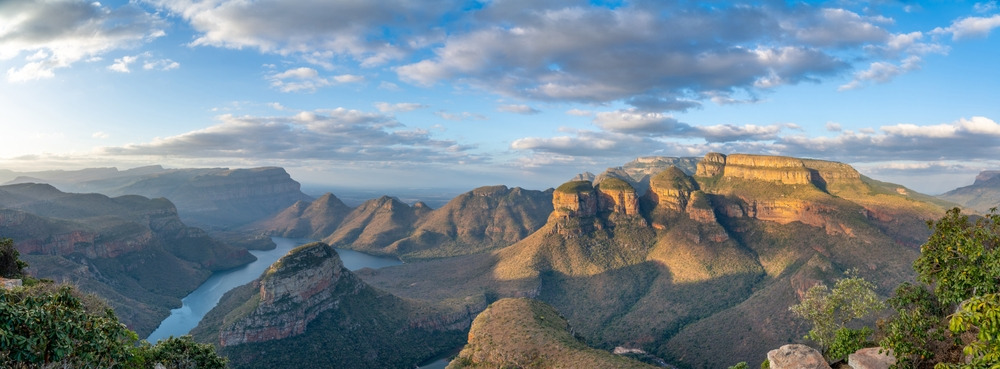
Three rounded rock formations, resembling traditional African huts (rondavels), rise above the river from the eastern rim. Several overlooks offer different angles on these quartzite pillars.
Bourke's Luck Potholes
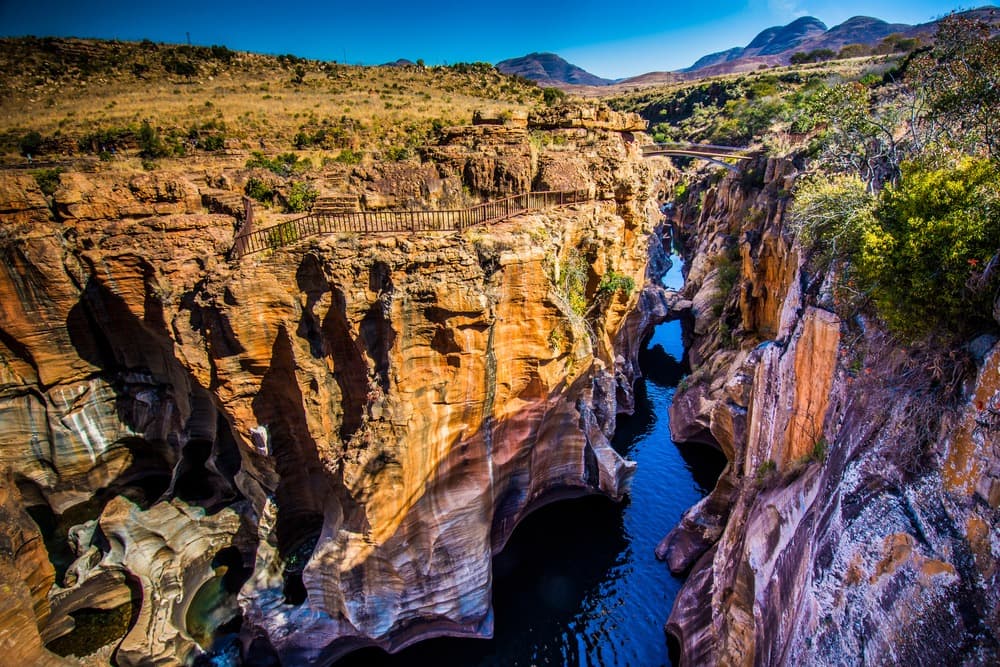
These cylindrical cavities formed at the confluence of the Treur and Blyde rivers, carved by swirling torrents laden with pebbles over millennia. Walkways allow visitors to walk above the potholes on a short route accessible to all.
God's Window
This overlook opens onto the Lowveld valleys 700 meters below. On clear days, views extend to the mountains of Mozambique. A short climb leads to a humid tropical forest zone that contrasts with the surrounding savanna.
Berlin Falls and nearby waterfalls
Several waterfalls dot the route, including Berlin Falls and Lisbon Falls, easily accessible from parking areas. Stops are brief but photogenic.
Leopard Trail
For hikers, this trail of approximately 4 hours descends into the canyon and passes through natural swimming areas. An early morning start is recommended for coolness and light.
Fauna and birdlife
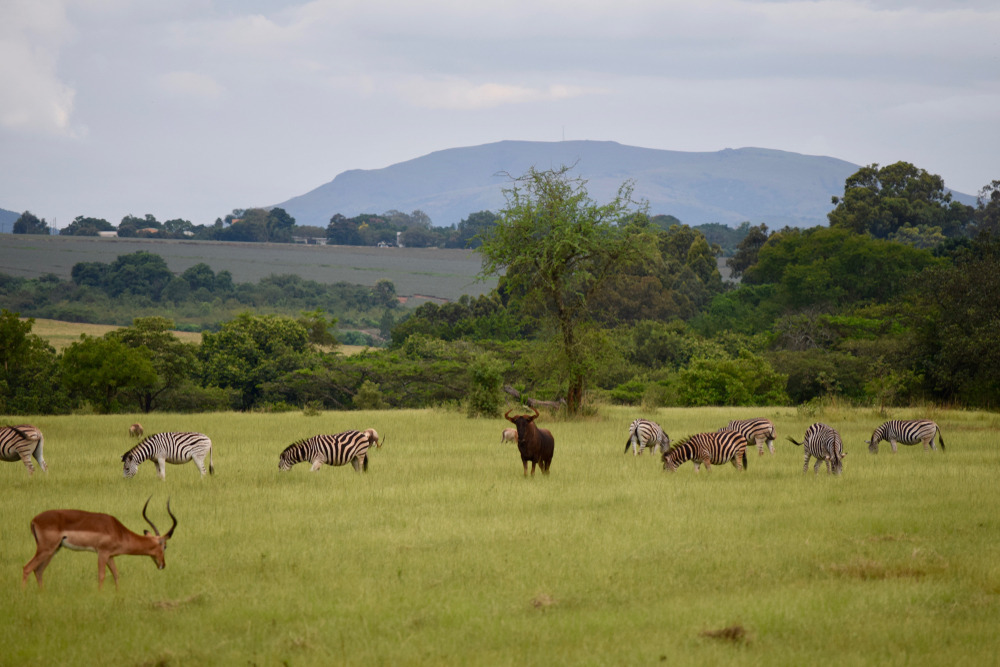
The protected area is home to hippopotamuses and crocodiles along the riverbanks, antelope on the slopes, and several primate species: vervet monkeys, samango monkeys and galagos. But it is the birdlife that draws most enthusiasts.
Key species for birdwatchers
- Narina Trogon: discreet forest bird, prized for its green and red plumage.
- Taita Falcon: rare, known breeder at Abel Erasmus Pass.
- Knysna Turaco and Purple-crested Turaco in ravine forests.
- Southern Bald Ibis, Cape Vulture, White-backed Vulture.
Raptors and nocturnal birds
- Black Eagle, Crowned Eagle, African Fish Eagle.
- Black-breasted Snake Eagle, Crowned Eagle, Wahlberg's Eagle.
- Spotted Eagle-Owl, Pearl-spotted Owlet.
Small passerines and colorful species
- Malachite Sunbird, Gurney's Sunbird.
- African Emerald Cuckoo, Cinnamon Dove.
- Golden-tailed Woodpecker, Olive Bushshrike.
When to go
The canyon is visitable year-round. Dry season, June to August, is most favorable for hiking: clear skies, cool mornings, sparser vegetation easing observation. Southern summer (December-February) brings lush vegetation but frequent late-afternoon storms, which can obscure overlooks like God's Window.
Practical information
- Duration of visit: a full day allows you to cover the main overlooks; two days are preferable to include a hike like the Leopard Trail.
- Rates: access to main sites (Bourke's Luck Potholes, viewpoints) is paid at entry, at a modest rate per person and vehicle. Bring cash in South African rands.
- Equipment: hiking boots, water, sun protection, binoculars for birdwatching.
How to get there
The canyon lies entirely in South African territory, in Mpumalanga province. For travelers on a regional circuit:
- From Johannesburg: approximately 5 hours by road via the N4, then the R532 and R40 which form the Panorama Route.
- From Kruger Park: Phabeni or Numbi gate approximately 1.5-2 hours from the first overlooks.
- From Mozambique: via the Lebombo border post (Maputo-Komatipoort), then heading to Hazyview, about half a day's drive.
A rental car remains essential to visit the scattered overlooks.
What to combine in the region
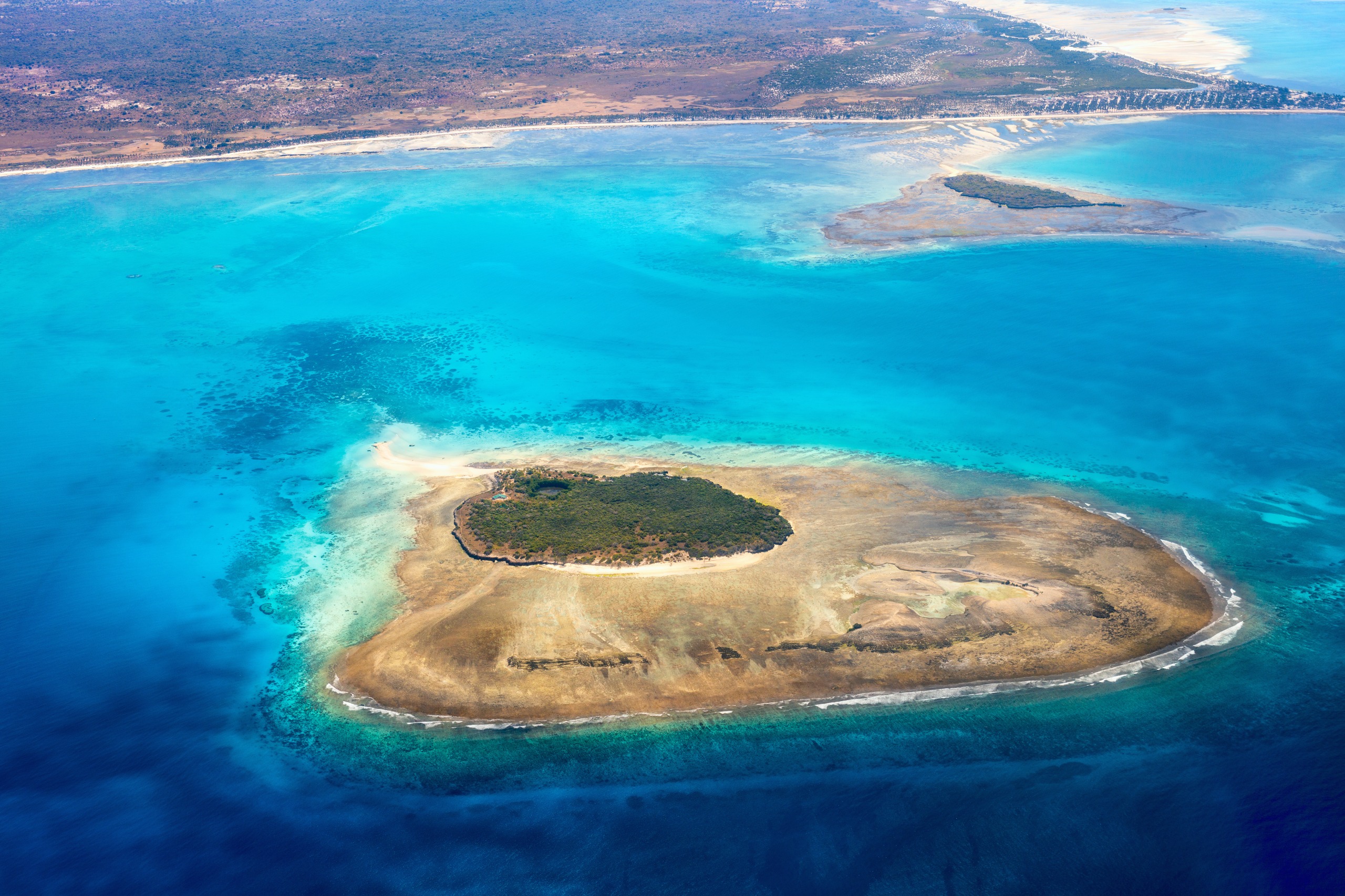
The canyon lends itself well to a cross-border itinerary. On the Mozambique side, travelers often extend to Gorongosa National Park for wildlife, the Bazaruto Archipelago for beaches and snorkeling, or Inhaca Island off Maputo. On the private reserves side, Madikwe Game Reserve completes a safari component.
Frequently asked questions
Frequently asked questions
Prepare your trip
Blyde River Canyon fits naturally into a circuit combining South Africa and Mozambique. To build a customized itinerary blending safari, landscapes and Indian Ocean coastline, consult our trips to Mozambique.
Interested in this visit?
We can include it in your personalised itinerary.