Madikwe Game Reserve
Madikwe Game Reserve
South Africa's fifth-largest game reserve, bordering Botswana, Madikwe combines the Big Five, reintroduced African wild dogs, and safari experiences with minimal crowds.
Madikwe Game Reserve spans nearly 750 km² in northwestern South Africa, along the Botswana border and at the edge of the Kalahari Desert. The country's fifth-largest reserve, it remains less visited than Sabi Sand or Kruger areas, making it an appealing choice for travellers seeking safari experiences in a controlled, uncrowded environment.
Why choose Madikwe
Three characteristics distinguish Madikwe among southern African reserves:
- Low visitor density: management rules limit a maximum of three vehicles per viewing point, which preserves the quality of sightings.
- An ecological transition zone: the reserve combines bushveld and semi-desert terrain bordering the Kalahari, a mix that produces great habitat diversity across a compact territory.
- Exclusive access via lodges: the reserve is open only to guests staying on-site, which ensures regulated visitor numbers and a structured experience.
A reserve born from rehabilitation
The region long suffered from agricultural and livestock exploitation that severely depleted wildlife. The reserve's creation in 1991 was part of a project combining ecological restoration with benefits for neighbouring local communities.
Launched that same year, the Operation Phoenix remains one of the largest species reintroduction programmes ever undertaken in southern Africa. Over 8,000 animals were released across the reserve, from large herbivores (elephants, buffalo, antelope) to predators. African wild dogs, a rare and threatened species, were successfully reintroduced in the 1990s and today rank among Madikwe's most recognised distinctive features in conservation-focused safari tourism.
What you'll see in the field
The reserve is home to over 90 mammal species and more than 350 bird species. Outings are organised around several viewing angles.
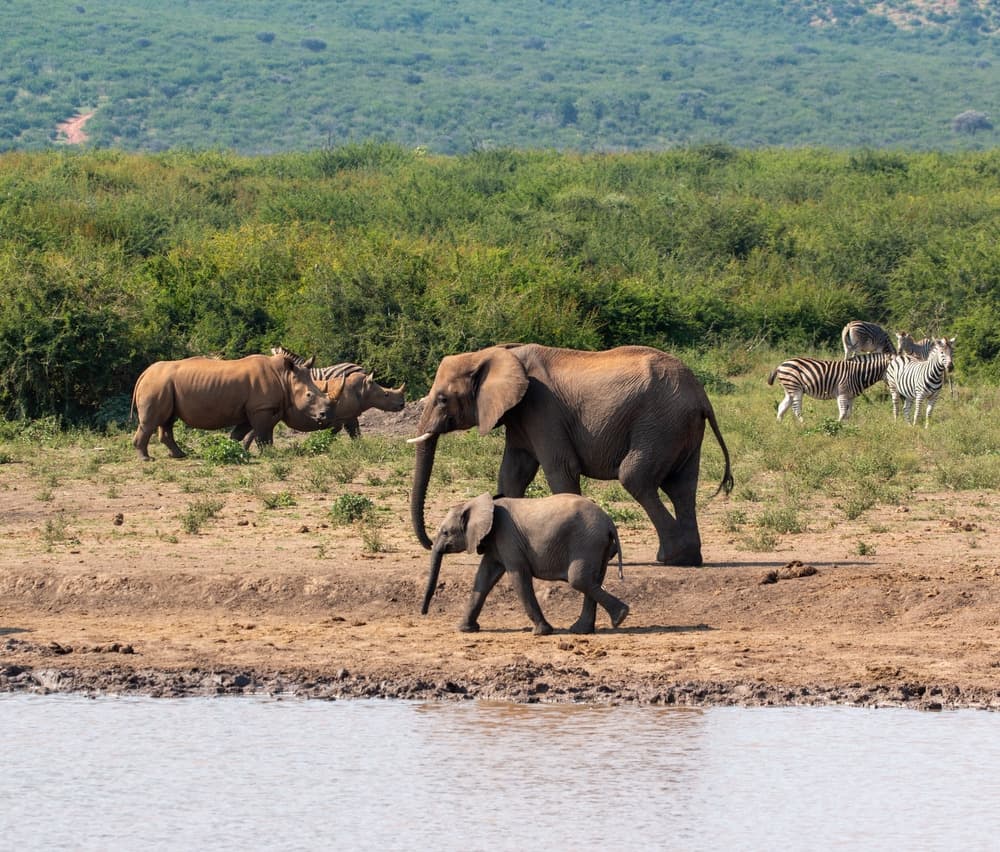
- The Big Five: lions, leopards, elephants, rhinoceros and buffalo are all present. The leopard remains the most elusive, true to its typical behaviour.
- African wild dogs: Madikwe is one of Africa's most reliable sites for observing these canids in packs. Tracking is usually coordinated between the reserve's rangers.
- Other predators and large mammals: cheetahs, spotted hyenas, giraffes, zebras, hippopotamuses, and a notable diversity of antelope species (eland, kudu, gemsbok adapted to Kalahari conditions).
- Birdlife: ornithologists find rich territory here, with classic bushveld species and some visitors from more arid zones.
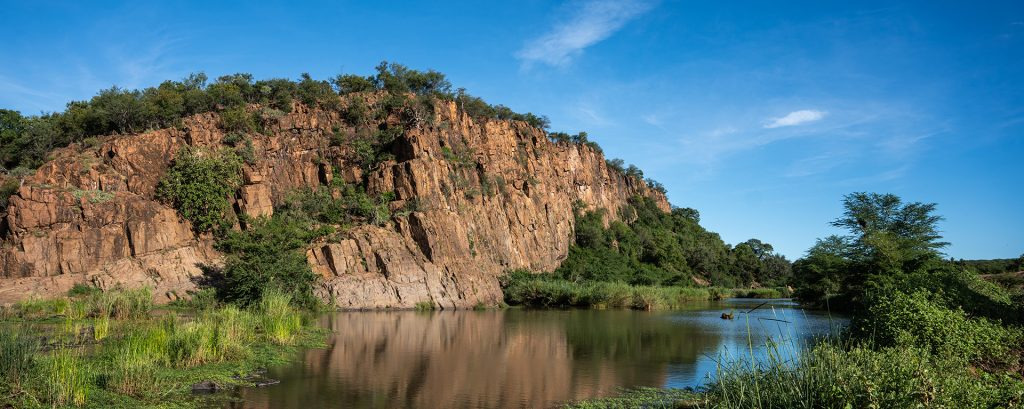
Landscapes alternate between vast plains, dense bushveld, rocky outcrops and isolated hills, allowing for varied scenery from one outing to the next.
How a safari works
Organisation follows standard reserve practices. Outings take place in open 4x4s, twice daily: one at dawn, one late afternoon extended with a portion in darkness. Rangers are sometimes assisted by a tracker, positioned at the front of the vehicle to spot tracks and signs of passage.
Some lodges also offer guided walks, allowing a slower approach to the terrain: ground trails, birds, insects, plants. To fully enjoy the reserve's diversity, a stay of 3 to 4 nights is generally advised.
When to visit
Madikwe experiences two clearly defined seasons:
- Dry season (May to October): clear skies, mild days, cool southern hemisphere winter nights. Vegetation becomes sparse and animals concentrate around water points, facilitating observations. This is the most sought-after period.
- Rainy season (November to April): warmer temperatures, afternoon storms, dense vegetation. Births are plentiful and migratory birdlife enriches observation lists. Animals are more dispersed and rain can slow certain movements, especially between December and January.
Practical information
- Access reserved for lodge guests: no day-trippers are admitted to the reserve. Safaris are conducted exclusively with guides affiliated to the establishments.
- 23 lodges spread throughout the reserve, with a wide range: from minimalist eco-conscious camps to high-end private suites.
- Three vehicles maximum per viewing point, a strict rule that structures the rhythm of outings.
- Five entrance gates: Abjaterskop, Wonderboom, Tau, Derdepourt and Molatedi. Opening hours follow sunrise and sunset; beyond those times, circulation is only possible under escort organised by the lodge.
On the accommodation side, the range covers several categories: Jamala Madikwe and Etali Safari Lodge at the ultra-luxury end, Madikwe River Lodge and Impodimo Game Lodge for more classic high-end comfort, Mosetlha Bush Camp & Eco Lodge for a minimalist and ecological approach, with no electricity or windows.
How to get there
The reserve is reached from Johannesburg, the region's main air hub.
- By car: allow approximately 4.5 hours of driving via paved routes to the western gates. A standard car is sufficient for most journeys; an SUV or 4x4 facilitates secondary tracks within the reserve.
- By scheduled flight: a private operator runs several daily connections between Johannesburg and Madikwe airstrip. Allow approximately 45 minutes of flight time. A faster option but significantly costlier than road transfer.
- By private transfer: a comfortable option, taking 4 to 5 hours depending on the lodge and road conditions. Cost depends on passenger numbers.
Transfer reservations are usually made through the lodge or a specialist agency, in line with your arrival in Johannesburg.
What to explore in the region
To extend a safari stay or diversify your itinerary, several other reserves and regional sites lend themselves to a combined trip:
- Pilanesberg National Park, a few hours from Madikwe, centred on an ancient volcanic crater.
- Gorongosa National Park, an emblematic example of ecological rehabilitation in southern Africa.
- Masorini archaeological site, for added cultural dimension.
Frequently asked questions
No. The reserve is accessible only to guests staying at one of its 23 lodges. Safaris are conducted with guides affiliated to these establishments, and no independent access is permitted.
Five gates serve Madikwe: Abjaterskop, Wonderboom, Tau, Derdepourt and Molatedi. The choice depends on the location of your booked lodge. Opening hours follow daylight hours; no free circulation is allowed at night.
A 3 to 4-night stay allows you to enjoy multiple morning and evening outings, and significantly increases your chances of spotting the most elusive species, particularly leopards and African wild dogs.
Yes. Madikwe is located in a malaria-free zone, making it a popular destination for travellers with children. Several lodges offer programmes tailored to young safari-goers.
Planning the rest of your journey
Madikwe integrates well into a broader itinerary across southern Africa, from the Indian Ocean coast to major continental reserves. To build a trip combining safari and other natural experiences, explore our travel suggestions for Mozambique and the region.
Interested in this visit?
We can include it in your personalised itinerary.