Phophonyane Falls Nature Reserve
Phophonyane Falls Nature Reserve
Just 1.5 hours from the Mozambican border, Phophonyane Reserve combines 80 m waterfalls, subtropical forest and an eco-lodge across 600 hectares in northern Eswatini.
Located around twenty kilometres from the border with Mozambique, in northern Eswatini, Phophonyane Falls Nature Reserve is a logical stop for travellers departing southern Mozambique in search of a nature detour. Approximately 1.5 hours' drive from Maputo, it combines waterfalls, subtropical forest and accommodation integrated into the landscape, across 600 hectares designated as a private reserve.
Why visit Phophonyane
The reserve holds geological, ecological and cultural significance. It forms part of the Barberton Centre of Plant Endemism, one of southern Africa's most remarkable zones of endemic flora, and rests on rock formations over 3.5 billion years old. It's also a relatively uncrowded site, suited to a short stay (a day excursion) or a two to three-night stopover from Maputo.
History and legend of the falls
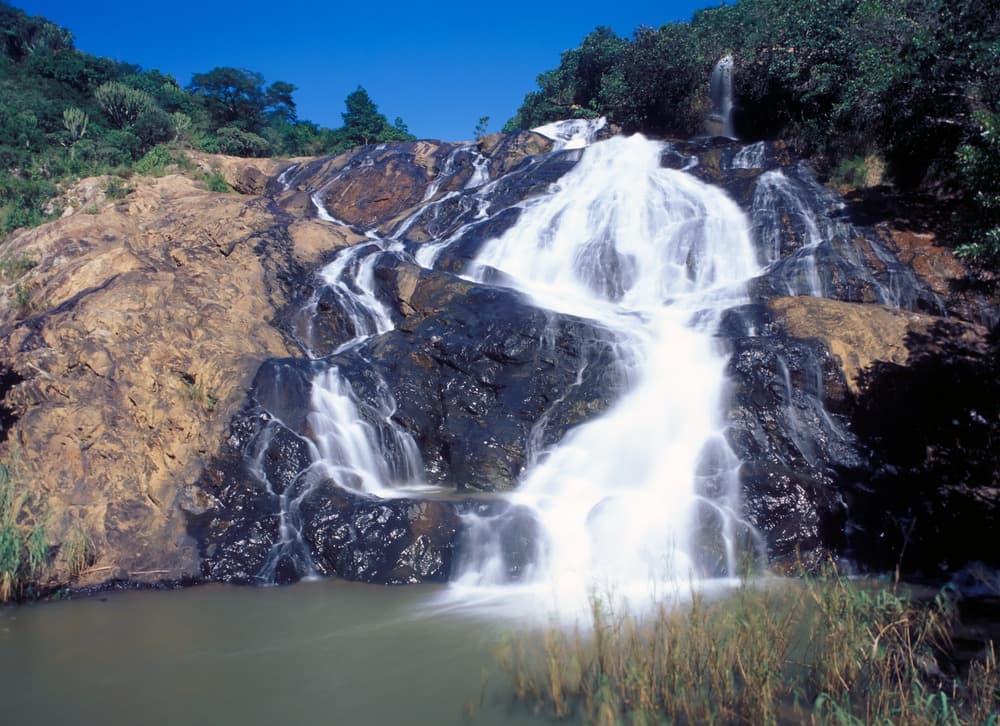
The spectacular gneiss formations of the region rank among the oldest known rock formations on Earth. It is upon this geological foundation that the Phophonyane River has carved cascades nearly 80 metres high, the reserve's focal point.
Local tradition offers a poetic interpretation: the falls are said to be the tears of a grieving young woman, whose lover was transformed into a flower by witches. This legend is still recounted by local guides and adds cultural depth to the visit, beyond its purely natural dimension.
What to see and do in the reserve
Fauna and birdlife
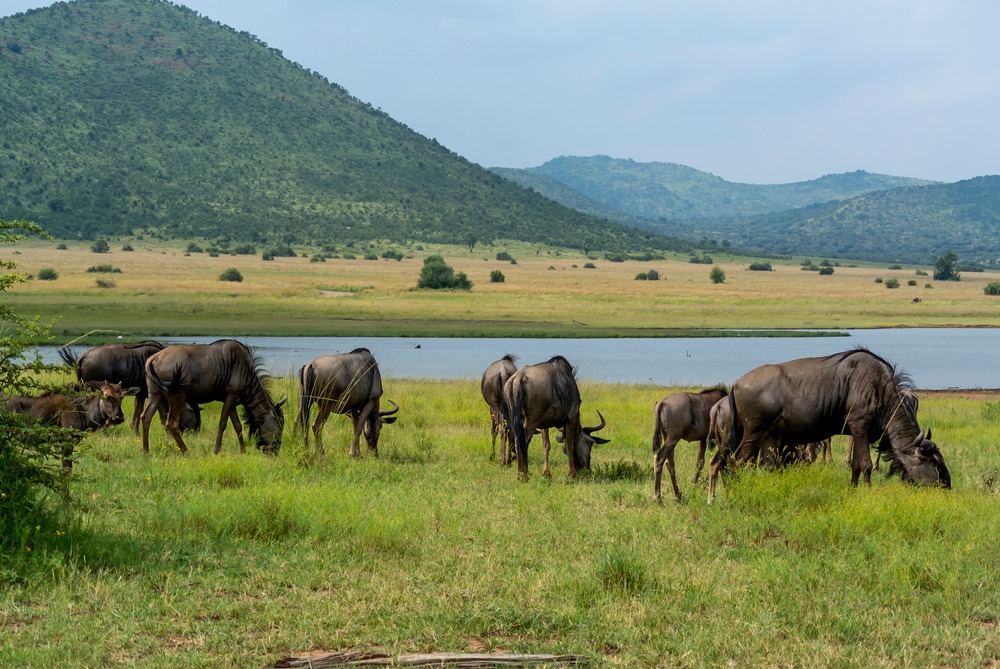
The forest harbours discreet wildlife, observable during guided excursions:
- Mammals: red duiker, bushbuck, banded mongoose, baboons and vervet monkeys.
- Birds: over 240 species recorded, including the Narina trogon, which has become Phophonyane's emblem.
- Reptiles: multicoloured skinks, and more rarely black mamba or python.
Trails and viewpoints
Several marked trails lead to different levels of the falls, natural pools and viewpoints overlooking the valley. A day excursion allows you to reach the Gobolondo ridge, extended by a visit to the Nsangwini rock paintings, attributed to the Bushmen San.
Accommodation and immersion
The reserve's eco-lodge offers rustic cottages, safari tents and traditional huts, integrated into the vegetation. Visits to neighbouring villages and a stop at the local school round out the experience for those seeking contact with daily life in Hhohho.
When to visit
The reserve is open year-round, but the experience varies considerably by season.
- Rainy season (November to March): vegetation at its densest, most powerful waterfalls, optimal birdwatching with migratory species. Trails can be slippery.
- Dry season (May to September): cooler temperatures, clear skies, wildlife easier to spot in sparse undergrowth. Waterfall flow diminishes but remains visible.
- Shoulder seasons (April, October): good compromise between greenery and hiking conditions.
Practical information
- Opening: daily, during daytime hours. Hours may vary by season; confirm with the lodge.
- Fees: paid entry, moderate rates, with child discounts. Bring cash, as card payment isn't always available.
- What to bring: hiking shoes, swimwear for natural pools, insect repellent, water.
- Border crossing: passport and vehicle documents essential if arriving from Mozambique.
How to get there
From Mozambique: from Maputo, two border posts are viable: Namaacha/Lomahasha or Goba/Mhlumeni. Once in Eswatini, head towards Mbabane then Piggs Peak. Allow approximately 1 to 1.5 hours between the border and the reserve.
From Piggs Peak:
- By car: take the MR5 road eastward, and turn right after 10 km (well-marked sign).
- By shared minibus: available heading towards the Mkhomazi River; disembark near the entrance then 1 km on foot.
- On foot: a marked scenic trail starts 5 km east of Piggs Peak, approximately 1.5 hours' walk.
What to see nearby
- Piggs Peak: neighbouring small town, markets and basic services.
- Bulembu: former mining town repurposed, interesting for its industrial heritage.
- Maguga Dam: one of southern Africa's tallest dams, suitable for fishing and boat trips.
- Ngwenya Mine: one of Africa's oldest known mines, with interpretive centre.
- Nsangwini rock paintings: rock art attributed to the Bushmen San.
If you extend your itinerary on the Mozambican side, Gorongosa National Park and Lurio Waterfall offer alternative approaches to Mozambican nature, while Inhaca Island and the Bazaruto Archipelago round out a circuit with a beach stopover.
Frequently asked questions
Frequently asked questions
To integrate Phophonyane into a complete circuit, consult our itinerary suggestions on our Mozambique travel page.
Interested in this visit?
We can include it in your personalised itinerary.