Phophonyane Falls Ecolodge
Phophonyane Falls Ecolodge
Ecolodge in a private reserve north of Piggs Peak: 11 intimate accommodations, marked trails, waterfalls and local community program.
About ten kilometers north of Piggs Peak, in the mountainous region of Hhohho, Phophonyane Falls Ecolodge occupies a private reserve crossed by a river and dotted with waterfalls. The property, located on the border with Mozambique and near Kruger on the South African side, often serves as a stopover between these two destinations for travelers seeking to slow the pace before or after a safari.
Why stay here
Phophonyane combines three rare assets on the same site: a private nature reserve with trails and wildlife, intimate accommodation (11 lodges for a maximum of 28 guests), and a declared local presence through a community program with the neighboring village school. The reserve protects a subtropical biotope where bushbuck and duikers still thrive, and provides access to the Nsangwini rock paintings, testament to the Bushmen San presence in this part of southern Africa.
The positioning is clear: neither resort nor rustic guesthouse. The ecolodge focuses on careful landscape integration—buildings dispersed through a tropical garden, local materials for Swazi-style thatched structures—and on the autonomy given to travelers (equipped kitchens in chalets, marked trails with free access).
Atmosphere
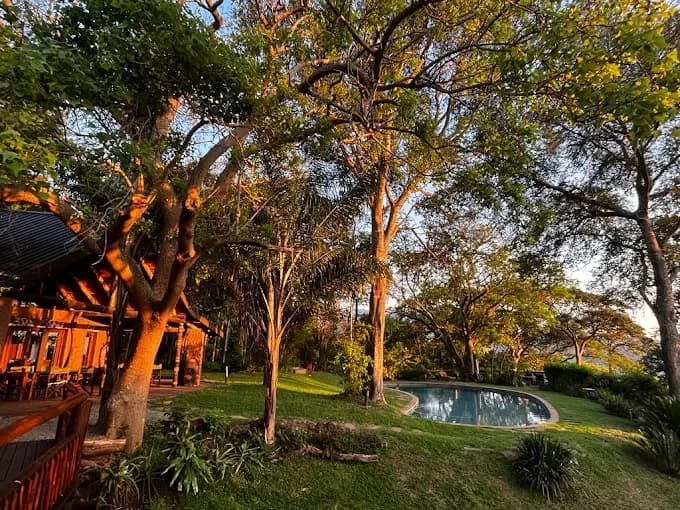
The site is organized around the Phophonyane river and its waterfalls, audible from most accommodations. The tropical gardens, threaded with streams and ponds, create a leisurely flow between the lodges, restaurant and pools. The whole place remains understated: no piped music, no aggressive lighting at night, which favors wildlife observation at dusk and dawn.
The spirit of the place echoes the African family lodge: multilingual staff, Swazi hospitality, and a genuine ability to advise travelers on the region—trails, observation times, excursions to nearby cultural sites.
Accommodations
The 11 lodges are divided into three categories, to choose according to your trip:
- Family chalets: equipped kitchen, fireplace and private garden. Self-catering format, suited to families or multi-night stays.
- Swazi beehive huts: structures inspired by vernacular Eswatini architecture, with valley views.
- Safari tents: simple comfort, immersion in nature, immediate proximity to the river.
Each accommodation features a fan, safe, kettle, private bathroom with toiletries, and a balcony or patio depending on type.
Dining and services
The Driftwood restaurant, at the heart of the lodge, occupies an open space overlooking the tropical gardens. The menu blends homemade dishes with local and international inspiration, accompanied by a selection of South African wines. Service in the dining room or on the terrace.
Shared facilities include two outdoor pools, Wi-Fi in common areas, free parking, laundry service, and round-the-clock reception. No spa or gym—the focus lies elsewhere.
On-site activities
Four marked trails allow you to explore the reserve on foot:
- Trail following the river to viewpoints G, D and J.
- Python cliff and Mbevane forest route.
- Short loop with close-up waterfall views.
- More accessible path linking the others.
The lodge also organizes 4x4 excursions to more remote areas, guided tours of the Nsangwini rock paintings, and meetings with the local school as part of the community program.
Access and location
The ecolodge is located approximately 10 km north of Piggs Peak, in the Hhohho region, accessible via the MR5 road which connects Eswatini to Mozambique and South Africa. Allow around 1 hour 10 minutes from Mbabane and 1 hour 30 minutes to 2 hours from King Mswati III international airport. A good quality track leads to the reserve entrance from the MR5.
By local transport, minibuses run between Mbabane, Manzini and Piggs Peak; ask to be dropped near the reserve entrance, then allow about 1 km on foot.
When to visit
The dry season (May to September) offers cool temperatures, walkable trails and good wildlife visibility around water points. The rainy season (November to March) significantly increases waterfall flow—the most visually spectacular period, but also the most humid for hiking. The shoulder seasons (April, October) often provide the best balance between flow, climate and visitor numbers.
Nearby
If you extend your journey to Mozambique or South Africa, several other accommodations in the region complement a stay at Phophonyane well:
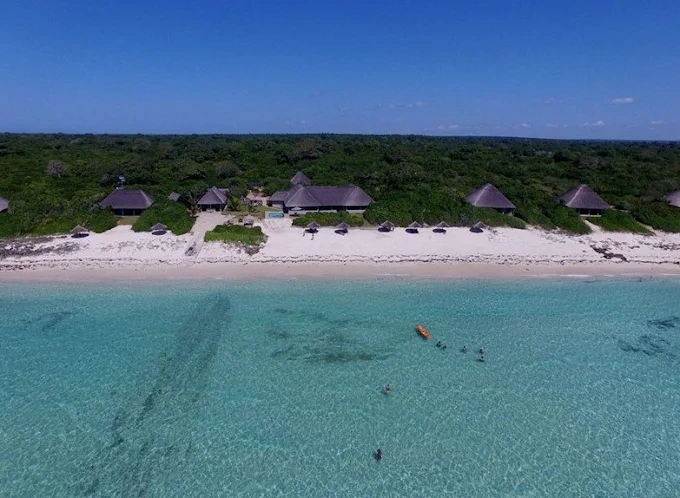
- Nuarro Lodge for the Mozambican coast and snorkeling.
- Ossimba Beach Lodge, another coastal address in the Quirimbas archipelago.
- Naara Eco Lodge & Spa, in a similar nature-focused philosophy.
- Pezulu Tree House Lodge, on the South African side, for an unusual night in a treehouse.
Planning your trip
Phophonyane Falls Ecolodge fits naturally into an itinerary combining Eswatini, Mozambique and northern KwaZulu-Natal. To build your tailor-made stay, explore our Mozambique journeys and discuss possible combinations with this region with our travel consultants.
Fancy staying here?
We can book this accommodation for you.