Safari in Mozambique: Our complete guide
Renowned for the beauty of its natural reserves and national parks, Mozambique is home to numerous wild animals.
Renowned for the beauty of its natural reserves and national parks, Mozambique is home to numerous wild animals. From the famous Big Five to wildebeest and elephants, the country is also home to hundreds of bird species! Eager to encounter this exceptional wildlife? Follow us as we take you on a safari in Mozambique!
What animals can you see on a safari in Southern Africa?
On a safari, you'll encounter the majestic Big Five (lion, elephant, rhinoceros, buffalo, leopard), zebras and hippopotamuses. But you'll also have the chance to spot endemic species, often rare!
The African Wild Dog

The African wild dog is a mammal belonging to the canine family (wolves, jackals, etc.). Unlike other animals, it has only four toes on each paw. Its other distinctive feature? Its large, rounded ears that crown its mouth with a deceptive hyena-like appearance! This endangered wild dog was reintroduced to Mozambique in 2018.
The Greater Kudu
The Greater Kudu is a large antelope that lives in mountainous forests. This endangered species is known for being extremely elusive. To spot it, you'll need to be attentive and observe the rugged, wooded terrain where it hides…
The Wildebeest
Another savanna giant, the wildebeest can reach up to 2.40 meters in length and weigh 290 kilograms. Nevertheless, its size doesn't prevent it from being an extremely fast animal, as it can reach 100 km/h when running!
The Waterbuck

Also called the "Defassa waterbuck," this antelope lives only in the savannas of sub-Saharan Africa, where the climate is harsh and extremely hot. During your excursion, you can admire its impressive build (the animal can reach 240 kilograms and 1.76 meters in height), the coppery color of its coat, and two beautiful rounded horns – found only in males.
2. Where are the best safaris in Mozambique? Must-see wildlife parks

Gorongosa National Park
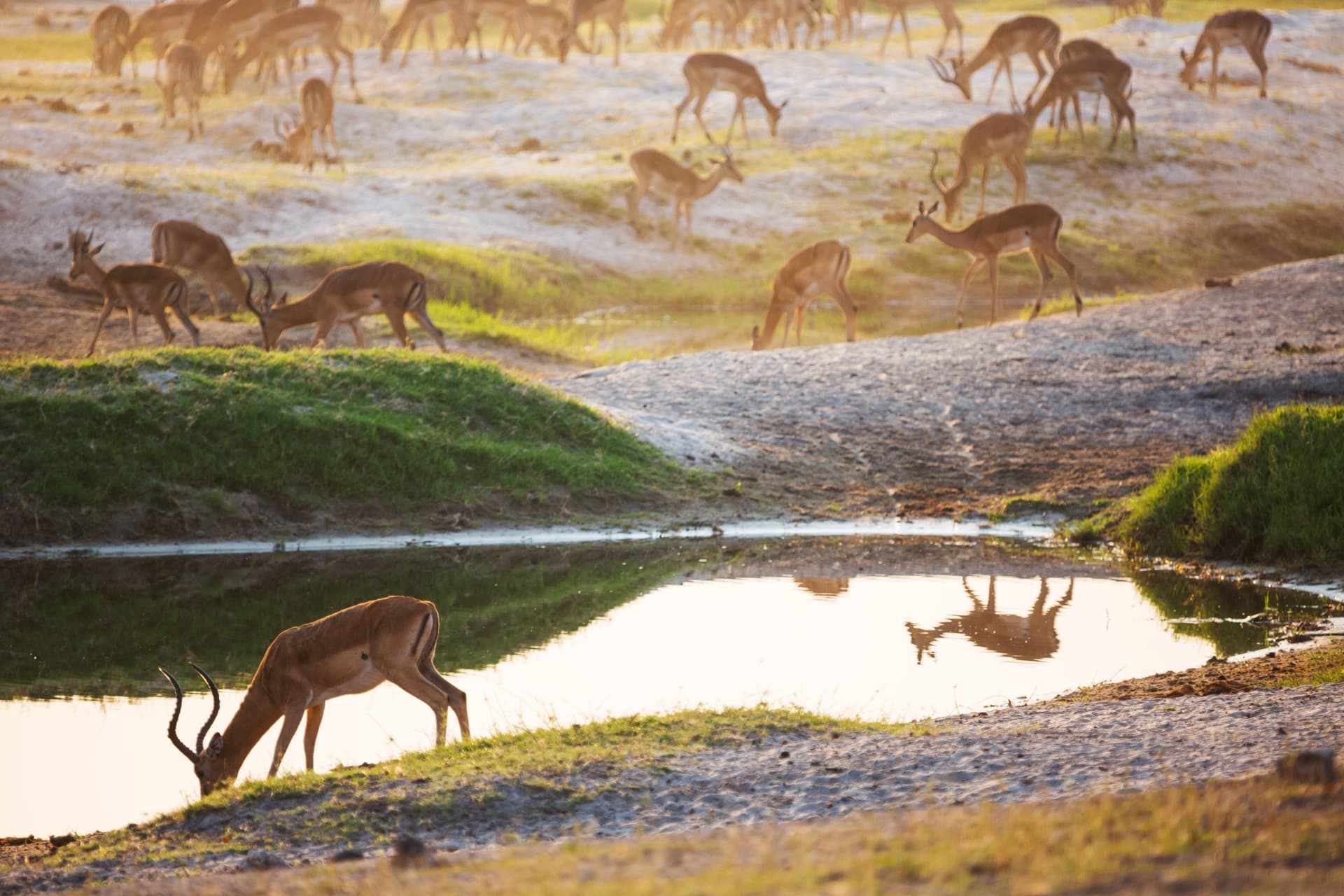
Decimated by more than 60% during the civil war, Gorongosa National Park is today classified as one of the world's richest biodiversity reserves (thanks to numerous government conservation efforts). You can admire the Big Five, but also other rarer species, such as the defassa waterbuck and thousands of impalas…
Chimanimani National Park
Located in a protected area of Manica province, Chimanimani National Park is a transboundary reserve with Zimbabwe. With an area of 656 km2, the park is praised for its "intimate" feel and endemic wildlife. Among them? Leopards, antelopes, baboons and bats.
Niassa Reserve
Covering more than 42,000 km2, Niassa Reserve is a lion conservation area that borders Tanzania. Composed of miombo (a wooded savanna that extends from central to southern Africa), it is home to buffalo, zebras and more than 400 bird species within its lush lands!
Limpopo Park
Limpopo Park is part of a transboundary area (shared with South Africa's Kruger National Park and Zimbabwe's Gonarezhou Park) where animals move freely. The Big Five, leopards, rhinoceroses, hippopotamuses, wildebeest and giraffes will dazzle you with their wild beauty.
Other parks…
With a total area of 801,590 km2, Mozambique is home to many other wild lands where you can experience a safari:
Banhine National Park;
Maputo Elephant Special Reserve;
Zinave National Park.
What type of safari should you choose? Two options
A safari organized by a specialized travel agency
Entrusting your safari organization to a specialized agency promises a hassle-free journey at the fairest price. This option also simplifies logistics since a package typically includes accommodations, vehicle rental, guide selection and meal provisions if you're staying within a park.
A self-organized safari
Some travelers choose to organize their safari independently. This option is possible, but requires extensive planning. In fact, in addition to managing all reservations (accommodations, park entry fees, logistics, etc.), it can prove quite challenging. The reason? Mozambique is not a highly touristy destination and information on organizing a trip can be difficult to find.
Where to stay on a safari in Mozambique?
Mozambique offers fairly varied accommodation options. Except for a few hotels in major cities or mid-range lodges near reserves or parks, you'll find few accommodations at "intermediate" prices.
Campsites, hostels, hotels: most accommodations offer either basic or high-end comfort. As a result, prices can vary significantly, from €20 to €200 per night for two people.
Frequently asked questions
The best time for a safari in Mozambique is between May and October, during the dry season. Animals congregate around water sources, making observations easier. Avoid the rainy season (November to April), which makes some roads impassable.
Citizens of English-speaking countries must obtain a visa to enter Mozambique. It's possible to apply for a visa on arrival at certain airports, or online through the official Mozambican government portal. Check with your embassy before departure to find out the latest requirements in place.
The budget varies depending on the type of safari you choose. If you opt for a safari organized by an agency with lodge accommodation, expect €150 to €400 per person per day. A solo safari camping in parks can cost €50-100 per day, but requires careful organization.
No, not all Mozambique parks are home to all of the Big Five. Gorongosa National Park and Limpopo Park are the most recognized destinations for observing lions, elephants, buffalo, leopards and rhinoceroses. Other reserves, like Chimanimani, focus more on endemic wildlife.
For your first trip to Mozambique, a safari organized by a specialized agency is highly recommended. The country is not heavily touristy and infrastructure can be limited outside major parks. An agency handles accommodations, guide, vehicle and logistics, ensuring a safer and more enriching experience.