Drakensberg
Drakensberg
Between jagged ridges and ancient San frescoes, Drakensberg unfolds 1000 km of wild mountains on the Lesotho border. Our complete guide.
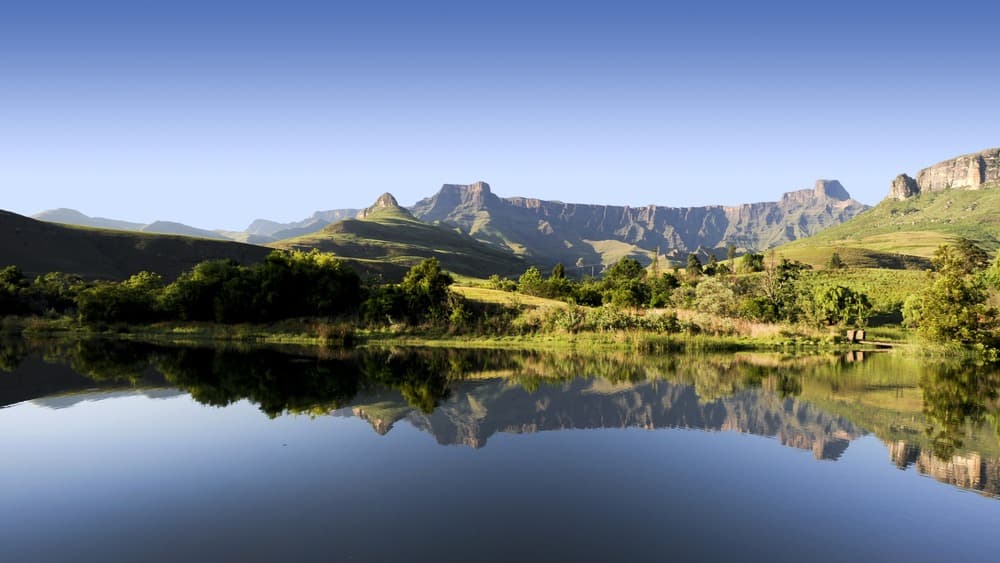
Sculpted by winds and veiled in mist, Drakensberg rises like a wild bastion between Lesotho and South African territory. Over nearly 1000 kilometers, this majestic mountain range—the highest on the continent—deploys its jagged ridges, verdant valleys, and impetuouswaterfalls. A refuge for wilderness lovers, this massif invites you to slow down, breathe pure air, and reconnect with what matters most. Here, nature reigns in all its raw power, without the slightest artifice.
A sanctuary inhabited by memory
Beyond its wild splendor, Drakensberg is a land steeped in memory. Within its rock cavities, the San—the region's first peoples—inscribed moving frescoes, suspended in the silence of ages.
- Over 150 rock art sites, including those at Giant's Castle and Cathedral Peak, tell of a sacred bond between humans, animals, and the invisible forces of the landscape.
- Every hike becomes a journey through time, between spirituality and millennia-old testimony.
A jewel of preserved biodiversity
Located less than 400 kilometers from Durban, Drakensberg reveals rare biodiversity, both animal and plant.
Emblematic fauna
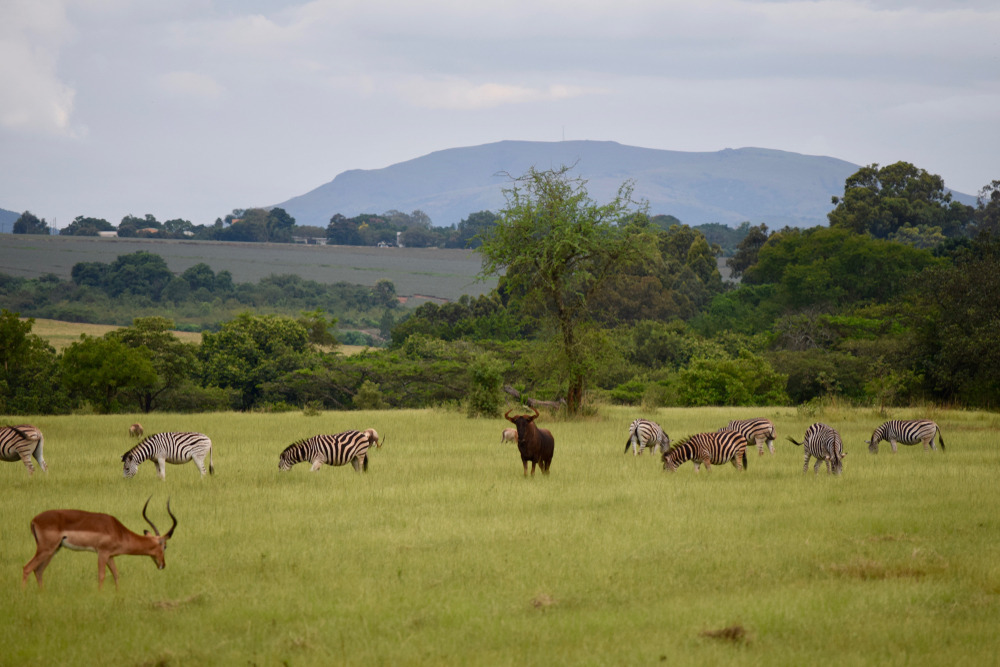
- Leopards, lynx, and small mammals inhabit the heights.
- The skies are traced by majestic species:
- Bearded Vulture, soaring silhouette of the summits.
- Crowned Eagle, one of Africa's most powerful raptors.
- Black Eagle, often spotted in full flight.
Endemic flora
- The massif's slopes shelter unique plants, perfectly adapted to high-altitude conditions.
- From alpine grasslands to scattered forests, landscapes transform with the seasons.
What to do in Drakensberg?
Essential hikes
Drakensberg is explored on foot, at the pace of footfalls, rugged terrain, and valleys shaped over centuries.
- Pholela River Trail (15 km): gentle, accessible walk, ideal for a peaceful immersion in the lush vegetation of the massif's southern reaches.
- Emerald Stream Trail (20 km): demanding hike leading to the summit of Pinacle Rock, with a sweeping view of surrounding canyons.
- Amphitheatre Trail: spectacular loop toward Tugela Falls, among the world's highest, dominated by the Amphitheatre's sheer walls.
Summits to conquer
For the more experienced, the massif offers climbs without serious technical difficulty, yet demanding endurance, preparation, and respect for the elements.
- Giant's Castle: emblematic bastion with powerful forms.
- Champagne Castle: Drakensberg's second-highest peak, crowned with grandiose panoramas.
- Cathedral Peak: isolated and elegant peak, prized for its clear views over surrounding foothills.
- Mont-aux-Sources: birthplace of the Tugela River, accessible via an epic ascent between sky and rock.
Outdoor activities
Beyond marked trails, Drakensberg invites a variety of activities, between physical adventure and moments of contemplation.
- Mountain biking: on marked tracks or wilder paths, through passes and valleys.
- Paragliding: to launch above plateaus and soar over ridges.
- Rock climbing: on natural rock faces suited to all levels, from raw granite to steep cliffs.
- Fishing: in clear waters teeming with trout, amid untouched nature.
At the Lesotho border
South of the massif, a vertiginous road climbs to the mythical Sani Pass, a true gateway to Lesotho's high plateaus.
- At over 2,800 meters altitude, this winding pass is traversed by 4x4 or by bike for the most seasoned adventurers.
- Recommended stops: encounters with Basotho herders, discovery of their traditional huts, and tasting of craft beer at Africa's highest pub.
When to visit?
Drakensberg can be explored year-round, each season revealing its own atmosphere.
- November to February: warm temperatures, lush vegetation, but frequent storms.
- March to May: soft light and golden valleys, ideal for hiking.
- June to August: dry season, excellent for wildlife spotting; bring warm clothing.
From Durban:
- From King Shaka Airport, follow the N2 then N3 to Pietermaritzburg, then turn onto the R74 toward Bergville or Underberg.
- Estimated time: 2.5 to 3 hours, well-maintained roads.
From Johannesburg
- Take the N3 to Harrismith, then the R74 via Golden Gate Highlands.
- Alternative via Villiers, the R26, and Clarens, before joining the R74.
Other options
- Shuttles from Durban and Pietermaritzburg to Underberg, Estcourt, or Bergville.
- Car rental recommended, as hiking areas are poorly served without a vehicle.
Want to discover this destination?
Our local advisors design your tailor-made trip.