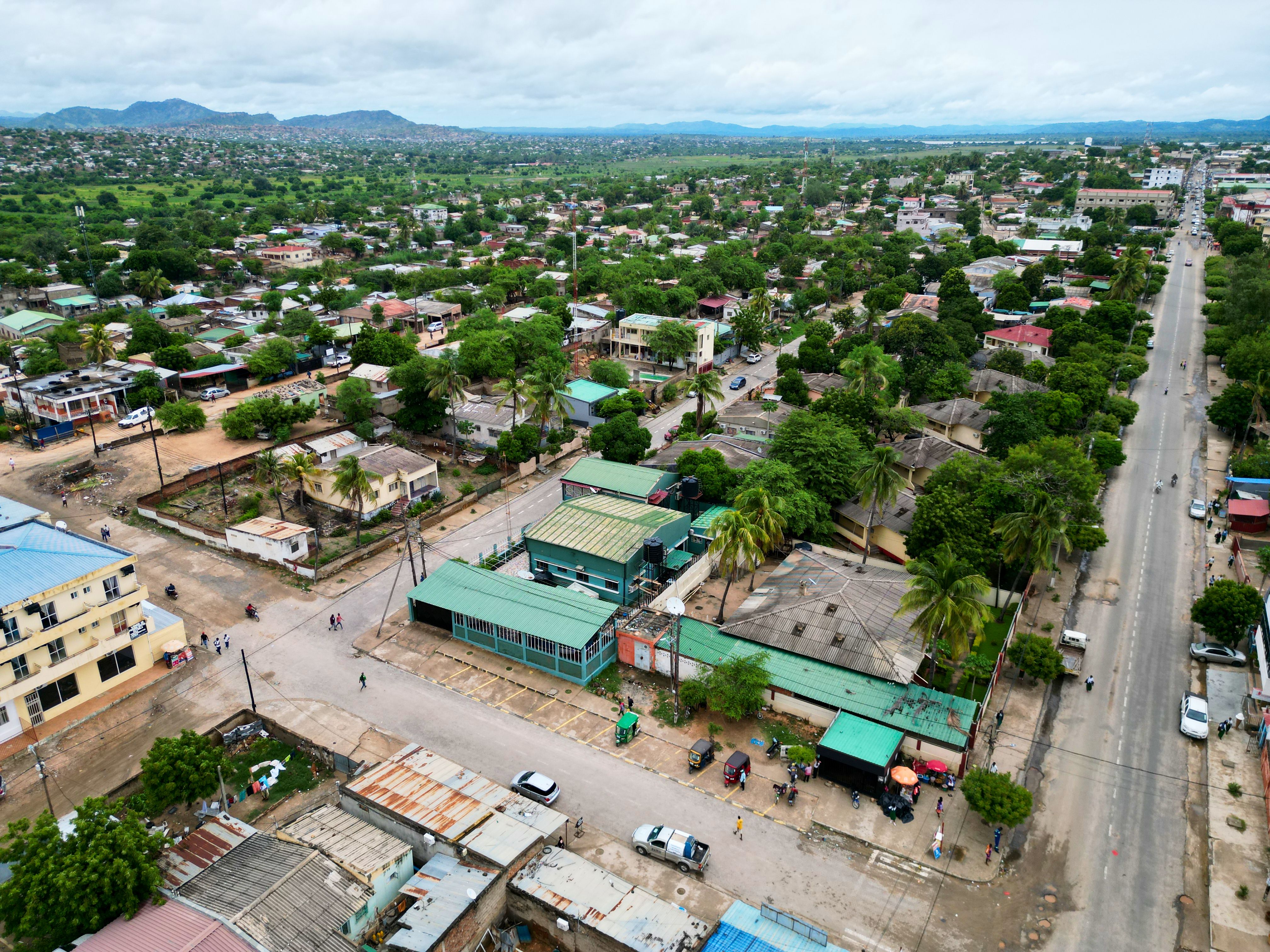
Chitengo
Chitengo is the main camp of Gorongosa National Park, the departure point for safaris in one of Southern Africa's most remarkable reserves, undergoing spectacular ecological restoration.
Chitengo is the main camp of Gorongosa National Park, in central Mozambique. Located within the park, it serves as the logistical base and reception centre for visitors who come to observe the wildlife of one of Southern Africa's most remarkable reserves. After decades of civil war that decimated the fauna, Gorongosa is experiencing spectacular ecological restoration, and Chitengo is its gateway.
Practical Information at a Glance
- Entrance: paid access to Gorongosa National Park (fees to be verified with the park or your agency)
- Access: from Beira, EN1 road heading north then turning towards Gorongosa — several hours' drive; 4×4 vehicle recommended during rainy season
- Recommended duration: minimum 2 nights to enjoy morning and evening safaris
- Clothing: neutral colours (khaki, beige, green) for safaris; mosquito repellent essential
- Season: dry season (April to October) for best wildlife viewing
What to See
Chitengo has a reception centre, accommodation (bungalows, camping), a swimming pool and restaurants. The camp itself is traversed by wildlife: buffalo, warthogs and antelopes regularly approach the facilities. This is where vehicle safaris depart towards the flooded plains of the Rift, the riparian forests and Lake Urema.
History and Context
Gorongosa was one of Africa's richest parks in the 1960s-1970s. The Mozambican civil war (1977-1992) caused the collapse of animal populations. Since 2008, a partnership between the Mozambican government and the Carr Foundation has funded ambitious restoration. Populations of elephants, lions, buffalo and hippopotamuses have increased significantly. Chitengo embodies this renaissance.
Highlights of Your Visit
Vehicle Safaris Across the Plains
The plains around Lake Urema concentrate wildlife during the dry season. Lions, elephants, zebras, wildebeest and numerous antelope species are regularly observed. Outings depart early in the morning and late in the afternoon.
Birdwatching
Gorongosa is home to over 500 bird species. The wetlands around Lake Urema attract herons, egrets, jabirus and numerous waders. A paradise for birdwatchers.
Gorongosa Mountain
Beyond the camp, an excursion to Gorongosa Mountain (accessible from the park's periphery) allows you to discover dense montane forest, very different from the plains. Guided hikes are available.
Photography Tips
The golden light in the first hours after sunrise and late afternoon is ideal for photographing wildlife on the plains. A telephoto lens (300mm minimum) is highly recommended. From the safari vehicle, remain silent and avoid sudden movements to avoid frightening the animals.
Location and Access
Chitengo is located within Gorongosa National Park, Sofala province. The city of Beira, the main regional hub, is the usual starting point by road. A small airstrip within the park allows charter flights from Beira or Maputo for organised groups. The access road passes through the village of Gorongosa before entering the park.
Nearby Attractions
- Gorongosa National Park — the entire park surrounds Chitengo; safaris, Lake Urema and riparian forests to explore.
- Beira — Mozambique's second city, the logistical starting point for reaching Gorongosa.
Frequently asked questions
The dry season, from April to October, offers the best conditions: less dense vegetation, wildlife concentrated around water points and roads passable. The rainy season (November to March) makes some tracks difficult to access.
During the dry season, a standard vehicle may suffice on the main road. During the rainy season, a 4×4 is essential. Safaris within the park are always conducted in an appropriate vehicle, supplied by the camp or your agency.
Yes, the camp offers bungalows and a camping area. It is advisable to book in advance, especially during high season (July-September). Your local agency can handle the booking.
Photography of wildlife and landscapes is free. There are no particular restrictions for visitors, but you should follow the guides' instructions during safaris.
Elephants, lions, buffalo, hippopotamuses, crocodiles, zebras, wildebeest, warthogs and numerous antelope species are regularly observed. The animal population continues to grow thanks to restoration programmes.
Want to discover this destination?
Our local advisors design your tailor-made trip.