Local Currency and Exchange
During a stay in Mozambique, understanding how the local currency works is essential for facilitating daily transactions. Whether paying for a meal, taking transport, or exchanging money, a solid grasp of the metical and local monetary practices will spare you considerable inconvenience. This guide provides the essentials for managing your money on the ground, from exchanging currency in town to precautions with cash.
During a stay in Mozambique, understanding how the local currency works is essential for facilitating daily transactions. Whether paying for a meal, taking transport, or exchanging money, a solid grasp of the metical and local monetary practices will spare you considerable inconvenience. This guide provides the essentials for managing your money on the ground, from exchanging currency in town to precautions with cash.
The Mozambican Metical
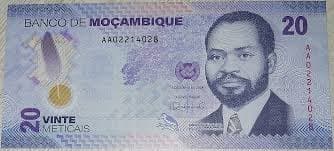
The metical (MZN) has been Mozambique's national currency since 1980, when it replaced the Mozambican escudo, a legacy of Portuguese colonial rule. Following its 2006 reform (which removed three zeros from the currency), the metical became more stable and better suited to everyday use.
Denominations in circulation:
- Banknotes: 20, 50, 100, 200, 500, 1,000 MZN. The 1,000 MZN note is less commonly encountered but remains useful for settling substantial expenses such as accommodation or long-distance travel.
- Coins: 1, 2, 5, 10 MZN. Coins of 0.5 MZN or centavos (cents) are rare and rarely used in practice.
Worth knowing : Banknotes of 50 MZN or less are highly sought after in markets and shared minibuses (chapas). Keeping a reserve of smaller denominations facilitates transactions.
Exchange Rates and Currencies to Bring
The metical's exchange rate fluctuates according to national and international economic conditions. As a rough guide:
- 1 € ≈ 75 MZN
- 100 MZN ≈ 1.30 €
Tip : Apps such as XE Currency, Wise, or Oanda let you track real-time daily rates and plan your conversions ahead.
Recommended currencies for exchange:
- US Dollar (USD): Highly valued in the south of the country and in areas near the South African border. Often preferred by exchange bureaus.
- Euro (EUR): Exchangeable without difficulty in major cities such as Maputo, Beira, or Nampula.
- South African Rand (ZAR): Often accepted in border regions, particularly in southern Mozambique.
Caution : Banknotes that are too old, torn, or wrinkled—particularly US dollars—are sometimes refused. Opt for recent denominations, ideally from 2009 onwards.
Where to Exchange Money in Mozambique?
Currency conversion can be carried out through various types of establishments:
- Commercial banks (BCI, Millennium BIM, Standard Bank, etc.):
- Secure and regulated.
- Sometimes limited hours: typically 8am to 3pm Monday to Friday.
- Fair rates but occasionally less competitive.
- Exchange offices (casas de cambio):
- Often located in shopping centers or tourist zones.
- Rates generally more attractive than those at the airport.
- Extended hours, sometimes open into the evening.
- International airports (Maputo, Nampula, etc.):
- Convenient upon arrival, but less favorable rates.
- Useful for changing a minimal emergency amount.
Street informal exchange is to be avoided: it is not only illegal but also exposes you to risks of fraud, counterfeit notes, or theft.
Practical Advice
- Favor smaller denominations: Merchants and minibus drivers rarely have change, particularly in rural areas.
- Check each note you receive: Especially in markets, bus stations, or tourist districts.
- Anticipate your needs before leaving town: Outside urban areas, access to banking services or exchange offices is often limited or nonexistent.
Useful tip : Keeping a small reserve of dollars or euros well hidden can prove valuable in case of urgent need or ATM failure.