Maputo and the South
A modernist capital overlooking its bay, a coastal elephant reserve, and manta ray diving off Tofo: the south captures the essence of a first journey to Mozambique.
Maputo and Maputo Province cover southern Mozambique, between the South African border at Ressano Garcia and the Save River, which marks the gateway to the country's centre. Our agency is based in the capital, on Maputo Bay, and we operate daily along this southern axis, which we consider the most accessible and best-structured region in the country. This is where most of our travellers begin or end their itinerary, arriving either through Mavalane international airport or by road from Johannesburg.
Maputo itself retains the urban layout inherited from the Portuguese period: wide avenues lined with jacarandas that bloom in October, modernist buildings from the 1950s–1970s designed by Pancho Guedes, and the Janeta and Museu markets where you'll find mangoes, cashew nuts, and matapa, a dish made with manioc leaves pounded in coconut milk. The Costa do Sol fish market operates on a simple principle: you buy your catch of the day—snapper, squid, langoustines—and one of the cooks there will grill it within the half hour. The Baixa neighbourhood, centred around the railway station designed in the late 19th century, is packed with cafés and bars where you can hear marrabenta, the popular music born in the capital's suburbs in the 1950s.
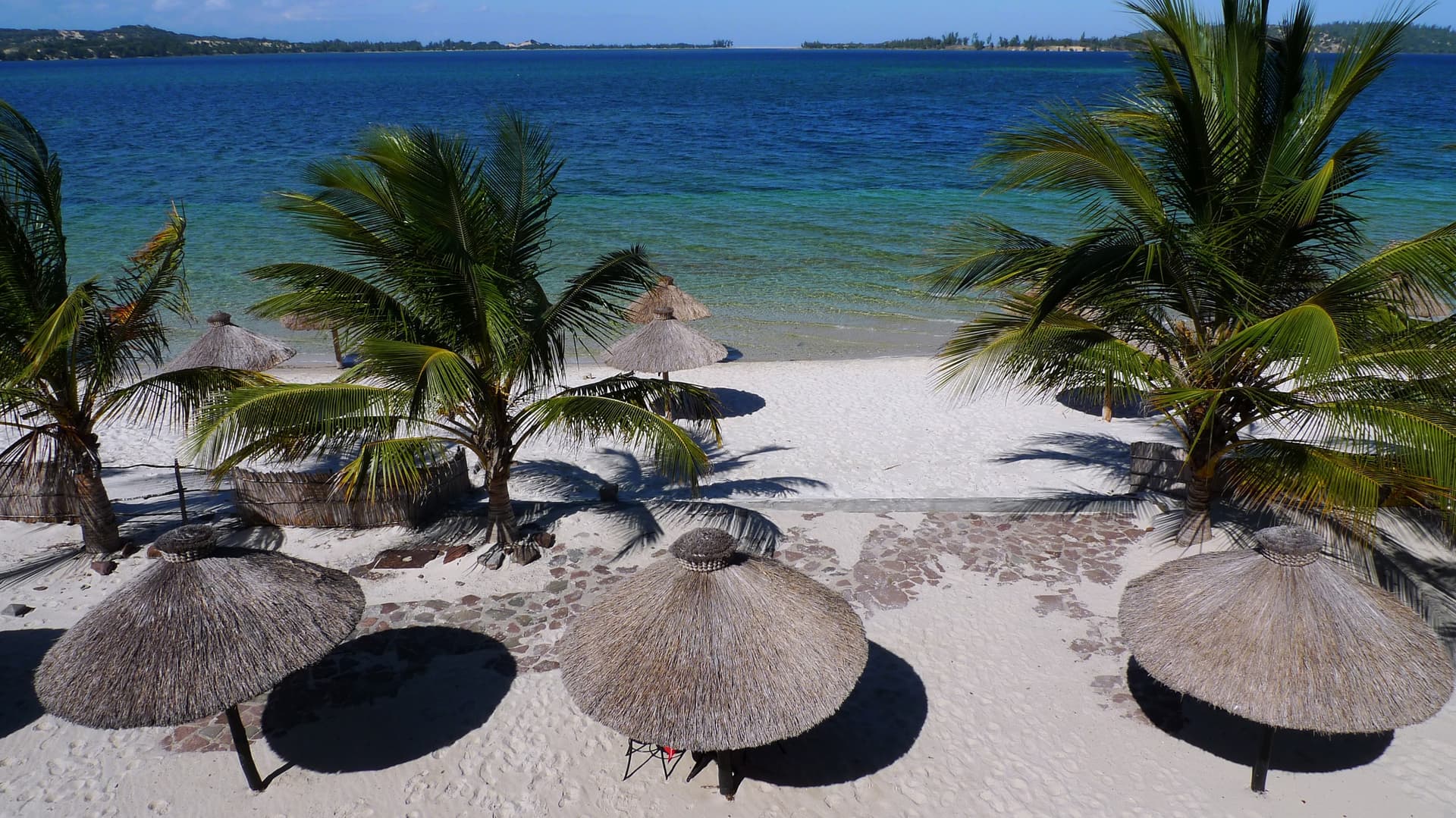
South of the bay, the Maputo Special Reserve sprawls across more than 1,000 km² down to the South African border. It protects a population of approximately 400 elephants, hippopotamuses in the Santa Maria lagoon, and coastal wildlife ranging from antelope and zebras to migratory birds. The Machangulo Peninsula, accessible by boat from Maputo in 45 minutes, offers almost empty beaches and Ponta do Ouro, a fishing village renowned for swimming with resident dolphins.
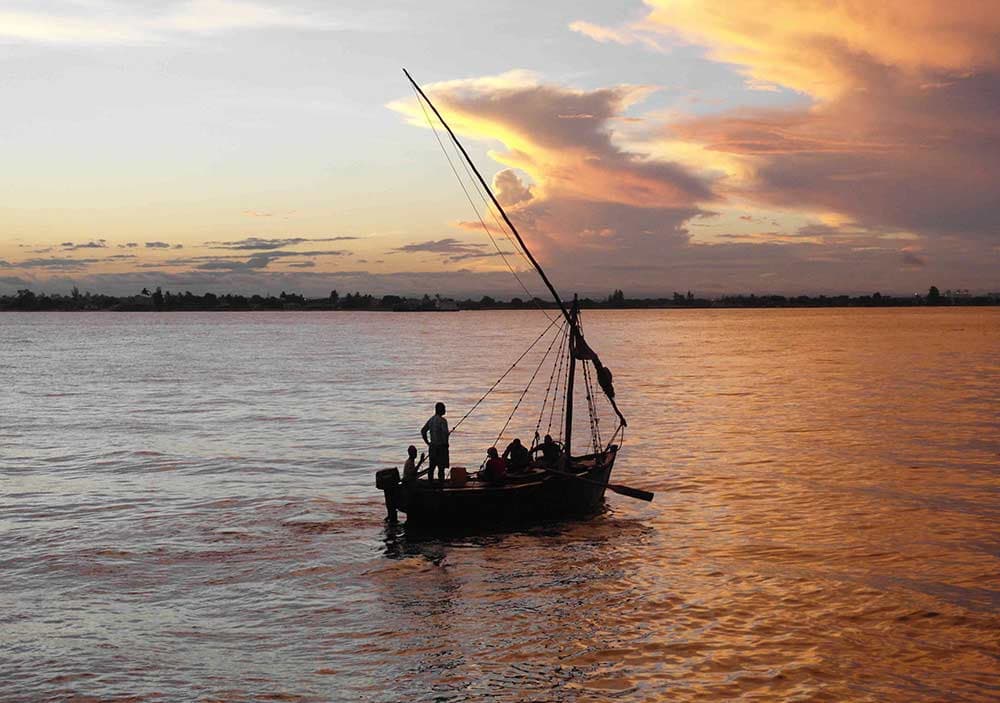
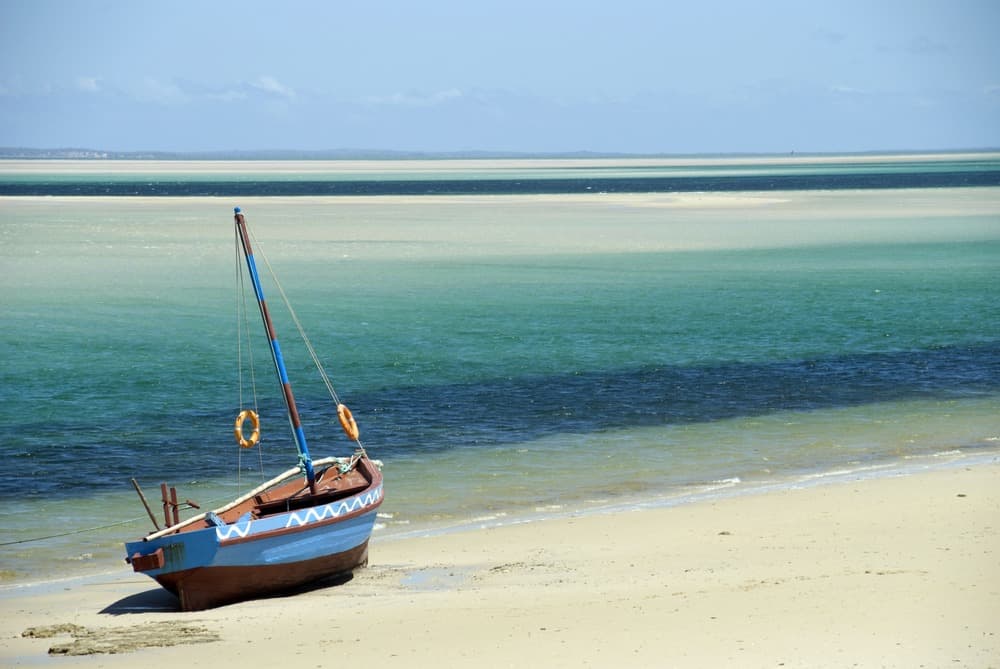
Further north along the EN1 national road, Bilene and its brackish lagoon serve as a weekend escape for Maputo residents. Some 470 km from the capital, Inhambane Province and the Tofo Peninsula are home to most of the south's diving activity: manta rays are observed year-round at Manta Reef and Giant's Castle, whale sharks migrate up the coast from October to March. Inhambane, once an Arab and then Portuguese trading post, retains its 18th-century cathedral and a waterfront where dhows still unload their catches.
The south is also home to the Tsonga people, whose language, xitsonga, and changana are spoken as widely as Portuguese in rural markets. The local economy relies on artisanal fishing, cashew nuts, copra production in Inhambane's palm groves, and beach tourism largely oriented towards South African visitors who drive down in 4x4s on weekends. This explains the relative density of accommodation along the coast between Maputo and Vilanculos, and the logistical ease of the region compared to the north of the country.
As for climate, we work with a fairly wide annual window. Temperatures range from 18 °C in July, the coolest month, to 32 °C in January at peak humidity. Rainfall remains moderate, around 800 mm per year in Maputo, concentrated between December and March. This temperate profile makes the south viable almost year-round, whereas northern Mozambique imposes stricter seasonal constraints.
Must-see
Costa do Sol fish market. Pick your catch of the day from the stalls, hand it over to the cooks at the back, and dine 30 minutes later with your feet in the sand, facing Maputo Bay.
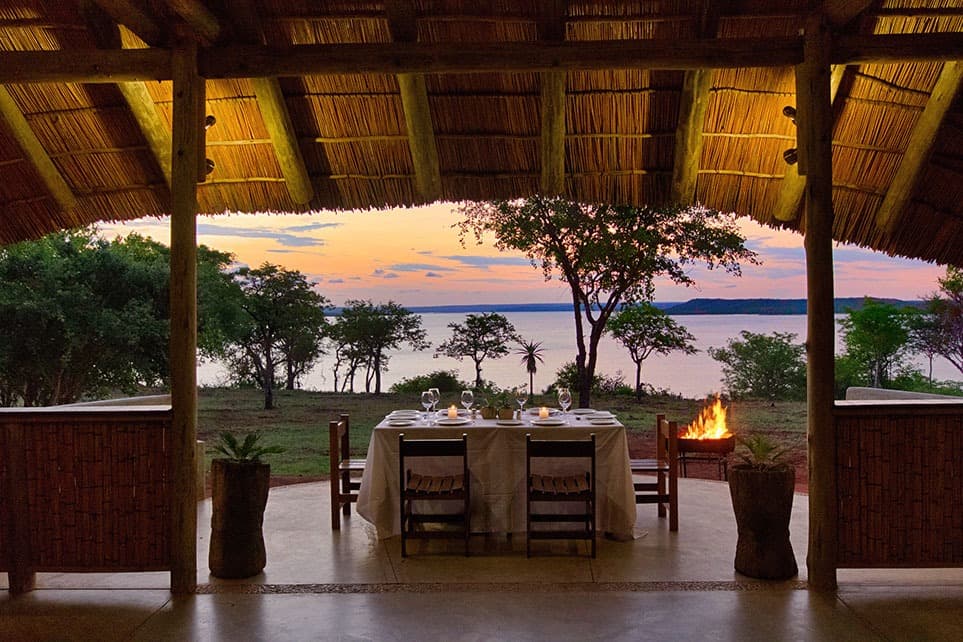
Maputo Special Reserve on foot and by boat. Approach coastal elephants and hippopotamuses in the Santa Maria lagoon, with overnight stays in a permanent camp at Anvil Bay on the Indian Ocean.
Manta ray diving in Tofo. Day trips departing from Praia do Tofo to the Manta Reef pinnacles, with manta sightings possible year-round and a whale shark window from October to March.
Maputo's modernist architecture. Half-day walking tour of the Baixa: the 1916 CFM railway station, buildings by Pancho Guedes, the 1903 central market, Portuguese cafés along Mao Tsé Toung avenue.
Inhaca Island and Portuguese Island. 2.5-hour boat crossing from Maputo, snorkelling on the southernmost coral reefs of East Africa, and overnight in the former fishing village.
When to go
We recommend the April to November window for visiting Maputo and the south. Temperatures remain comfortable, ranging from 22 to 28 °C during the day, with cooler nights in June–July (around 14 °C in Maputo, feeling colder along the windy coast). Underwater visibility in Tofo and around Inhaca reaches its best level between May and October, with 15 to 25 metres of visibility on diving sites. September and October see humpback whale migrations off the Machangulo Peninsula.
The rainy season runs from December to March. Rainfall remains moderate in Maputo (200 mm in January, the wettest month), but secondary roads in the Maputo Special Reserve and access to some Machangulo lodges become difficult after heavy rains. January and February also carry a cyclone risk, especially along the Inhambane coast. Conversely, this is peak whale shark season in Tofo and when jacarandas and flame trees colour the capital.
Practical advice
We recommend a minimum of 7 days to properly explore the south: 2 days in Maputo for the city and Costa do Sol market, 2 to 3 days in the Maputo Special Reserve or on Machangulo, and 3 days in Tofo or Barra for diving. Mavalane airport in Maputo is the logical entry point, with direct flights from Johannesburg (1 hour), Lisbon, Addis Ababa, and Doha. Arriving by road from Johannesburg via the Lebombo border post takes around 6 hours and allows for a combination with Kruger Park.
For continuing through Mozambique, the most natural next leg is the Bazaruto Archipelago, reached by a 1-hour 15-minute internal flight from Maputo to Vilanculos, or by road in 10 hours with a stop in Tofo. Travellers with 15 days or more can continue to Gorongosa and the centre via a Beira flight. The south is particularly suited to families, first-time visitors to southern Africa, and divers: accommodation ranges from urban boutique hotels in Maputo to stilt eco-lodges on Machangulo, with a comfort level generally superior to that of the northern provinces.