Maputo Special Reserve
Maputo Special Reserve
Located 90 km south of Maputo, the reserve protects elephants, mangroves and coastline. Practical guide to organizing your safari in Mozambique.
Maputo Special Reserve, integrated since 2021 into the Maputo National Park, protects a range of coastal and terrestrial ecosystems in southeastern Mozambique. Situated approximately 90 km south of Maputo, the reserve combines mangrove forests, wetlands, savannas and Atlantic coastline across nearly 1,000 km².
Why visit the reserve
The reserve primarily attracts travelers seeking safari experiences beyond the conventional Southern African circuit. Its elephant population, rescued from poaching through conservation programs implemented since the 2000s, stands as its main draw. The diversity of habitats — from coastal marshes to dry forests — allows visitors to observe varied wildlife and flora within a relatively compact area.
Unlike major South African parks, visitor numbers remain modest. The trails traverse contrasting landscapes where wooded dunes, lagoons and deserted beaches opening onto the Indian Ocean alternate in striking patterns.
Reserve history
The area has been protected since 1960, when it was established as a special elephant reserve to preserve a population threatened by hunting. In 1969, it was renamed Reserva Especial do Maputo and its status was expanded to protect the territory's overall biodiversity.
During the Mozambican Civil War (1977-1992), the reserve served as a base for rebel groups. The conflict, poaching and isolation led to severe wildlife decline, particularly among large carnivores. Since the late 1990s, species reintroduction programs (giraffes, zebras, antelopes) and elephant protection efforts have enabled gradual population recovery. In 2021, its merger with the Ponta do Ouro coastal zone created Maputo National Park.
What to see and do
Wildlife
The most visible species include:
- African savanna elephants: the main population, often spotted near water sources
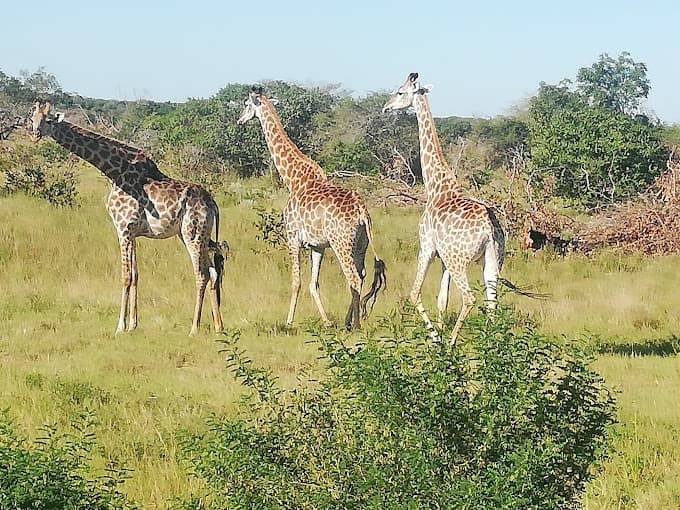
- Giraffes, zebras, antelopes (including nyalas, elands, blue wildebeest): reintroduced since 2010
- Buffalo and hippopotamuses in wetland areas
- Leopards: present but elusive
- Sea turtles along the coast (nesting season October to February)
- Rich birdlife (over 350 species recorded) in mangroves and lagoons
Note: lions are not part of the reserve's current wildlife. Large predators remain rare.
Flora and habitats
Vegetation reflects the diversity of soils and climates. You'll find baobabs, mopane and marula forests, along with dry forests on ancient dunes, floodable grasslands and coastal mangroves.
Activities
Visitors can undertake 4x4 safaris (self-guided or with a ranger), guided walks and bird-watching outings. The coastal section provides access to pristine beaches ideal for hiking and, in season, for observing sea turtles.
When to visit
The dry season, from May to September, remains the most favorable period: moderate temperatures, low humidity, passable trails and wildlife concentrated near water sources. The rainy season (November to March) makes some trails difficult to access, but coincides with the turtle nesting season on the coast.
Practical information
- Accommodation: rustic campsites and modest lodges within the park, more comfortable lodges nearby (Ponta do Ouro)
- Entry permit: paid at the main entrance, moderate rate for foreign visitors
- Equipment: water, provisions, binoculars and fuel should be arranged before entry (no services inside)
- Health: malaria-endemic zone, preventative treatment recommended
How to get there
The main entrance (Portão da Machangulo) is located approximately 90 km south of Maputo, roughly 2.5 to 3 hours by road depending on trail conditions. The journey involves crossing Maputo Bay via the Maputo-Katembe bridge, then following the road toward Ponta do Ouro.
A high-clearance 4x4 vehicle is essential, both to reach the entrance and to travel within the reserve, where trails are sandy. Renting a 4x4 in Maputo or booking a transfer through a local operator remain the most straightforward options. No regular tourist air service connects to the reserve.
Nearby
Several Mozambique sites deserve to be combined with a reserve visit:
- Maputo, the logical starting point, for its colonial architecture and markets
- Gorongosa National Park, another emblematic conservation site in the country's center
- Lurio Waterfall for travelers continuing northward
Frequently asked questions
Frequently asked questions
No, lions are not part of the reserve's current wildlife. Large carnivores declined sharply during the civil war. Only a few elusive leopards remain present.
Yes, a high-clearance 4x4 is required. Interior trails are sandy and impassable with a standard vehicle, particularly after rainfall.
Allow a minimum of 2 days and 1 night to enjoy the park, ideally 3 days to combine safari and coastal activities. A day excursion from Maputo is possible but significantly limits the experience.
Yes, but the dry season (May to September) remains considerably more practical. During the rainy season, certain trails become impassable.
Since 2021, Maputo Special Reserve merged with the Ponta do Ouro marine reserve to form Maputo National Park. The historic terrestrial zone often retains its former name in common usage.
Plan your journey
Maputo Special Reserve fits naturally into a circuit through southern Mozambique combining safari, coastline and urban culture. To build an itinerary suited to your needs, consult our Mozambique trips.

Interested in this visit?
We can include it in your personalised itinerary.