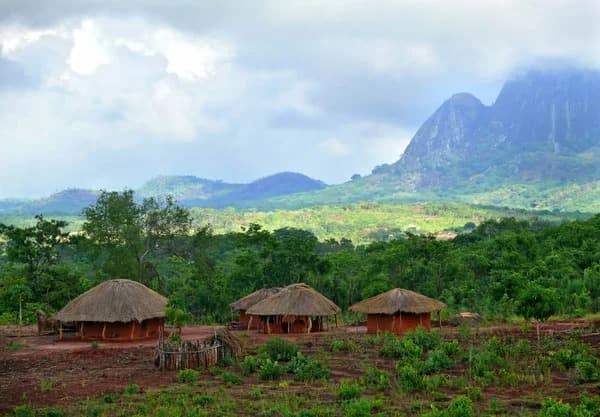
Macua Village
Macua Village
Two hours from Pemba, Makua villages showcase the culture of northern Mozambique's principal ethnic group: matrilineal society and earth architecture.
In northern Mozambique, in Cabo Delgado province, Makua villages (sometimes spelled "Macua") offer insight into the culture of the region's principal ethnic group. Approximately two hours' drive from Pemba, these rural hamlets reveal a matrilineal social organisation, earth architecture, and a way of life that remains largely traditional and agricultural.
Why visit a Makua village
The Makua are among the most numerous peoples of northern Mozambique. Their villages interest travelers eager to understand Bantu matrilineal societies, where property transmission and marital residence follow the maternal line. It's a meaningful ethnographic complement to a beach stay in the Pemba region or an excursion to the Bazaruto archipelago.
On site, you'll observe circular village organisation, subsistence farming techniques, and, depending on the season, certain communal rites. The visit is typically conducted as a guided experience, accompanied by a local mediator fluent in Portuguese or Makua.
History and social organisation
The term "Macua" refers first and foremost to a people, not a single village. Makua communities have long been settled in northern Mozambique and southern Tanzania. In the 18th century, the Portuguese established trade relations with these populations from their coastal trading posts, notably around Mozambique Island and Pemba.
Makua society is matrilineal: in a Makua marriage, it is the man who joins the woman's family, and property and land are passed down through the maternal line. The village chief remains the guardian of customs. Major life milestones—birth, passage to adulthood, marriage, and death—are marked by initiation rites that structure group belonging.
What to see and do
Village architecture
Houses are built from dried mud, straw, and wood. They are arranged in concentric circles around a central plaza, which serves as a meeting space and ritual ground. This layout encourages circulation, communal life, and thermal regulation within the dwellings.
Subsistence farming
The economy is based primarily on subsistence crops: maize, cassava, and peanuts. Depending on the season, you may observe fieldwork, cassava pounding, or flour preparation. Some visits include tasting local dishes made from these ingredients.
Crafts and daily life
Makua craftsmanship includes wood carving, pottery, and work with plant fibres. Makua women are also known for "mussiro," a white facial mask made from ground bark, used as a skincare treatment and cultural marker. Ask your guide if it's possible to witness its preparation.
When to visit
Cabo Delgado's climate features two distinct seasons. The dry season, from May to October, offers the best visiting conditions: roads are passable, temperatures are more bearable, and travel is easier. The rainy season, from November to April, corresponds to planting and harvest periods; landscapes are lush but some tracks become difficult to access.
How to get there
Pemba, capital of Cabo Delgado province, is the logical starting point. The city is served by domestic flights from Maputo, as well as a few regional connections. Direct international flights are rare: transit via Maputo, Johannesburg, or Dar es Salaam is standard.
From Pemba, plan for approximately two hours by 4x4 to reach the Makua villages in the interior. It's best to go through a local agency or lodge that organises the visit, ensuring proper community welcome and a guide-translator.
Practical advice
- Prioritise a guided visit with a local guide or agency: this facilitates welcome and ensures fair compensation for the village.
- Always ask permission before photographing residents, particularly during ceremonies.
- Wear clothing that covers shoulders and knees out of respect for local customs.
- Bring water, sun protection, and sturdy closed-toe shoes suitable for tracks.
- Allow half a day to a full day for your visit depending on the programme.
Nearby attractions
- The coastal city of Pemba, its beaches and bay, ranked among the world's largest.
- Quirimbas Nature Reserve, which encompasses an archipelago and a continental hinterland rich in wildlife.
- The Lurio waterfall, in the same northern region of the country.
- Further south, Gorongosa National Park for wildlife viewing.
Frequently asked questions
Frequently asked questions
No. "Macua" (or Makua) refers to a people, not a single village. Several Makua villages in Pemba's interior welcome visitors, typically through local agencies or lodges.
Allow half a day to a full day from Pemba, including transfers (approximately two hours each way).
The dry season, from May to October, offers the best access and comfort conditions. The rainy season, from November to April, complicates travel but coincides with agricultural work.
Yes. In a Makua marriage, it is the man who joins the woman's family, and property and land are passed down through the maternal line.
Yes, this is the most common option. The visit complements well a stay in Pemba, the Quirimbas archipelago, or further south at Bazaruto.
Plan your trip
To incorporate a visit to Makua villages into a bespoke itinerary in northern Mozambique, consult our Mozambique travel suggestions.
Interested in this visit?
We can include it in your personalised itinerary.

