What animals can you observe in Mozambique?
While civil war decimated numerous animal populations in Mozambique, the country has, for several years now, been working to breathe new life into its wild territories.
While civil war decimated numerous animal populations in Mozambique, the country has, for several years now, been working to breathe new life into its wild territories. Gradually, Mozambique is making its way back to becoming one of Africa's finest destinations for witnessing animals in their natural habitat. So then, what animals can you see when traveling to Mozambique? We tell you all you need to know.
On the unfortunate history...
Unfortunately, wildlife populations saw their numbers decrease drastically due to Mozambique's civil war (1977-1992) and poaching. Faced with this disaster, authorities, with the help of animal protection associations and foundations, implemented numerous conservation plans to repopulate the territory.
Thus, many areas were designated as protected spaces (such as the recent creation of Quirimbas National Park or the expansion of Bazaruto National Park) and animals were reintroduced into existing parks and reserves, such as Gorongosa National Park, where African wild dogs were reintroduced in 2018.
Terrestrial animals to see in Mozambique
With a great variety of landscapes, ranging from forests to savannas, Mozambique hosts exceptional terrestrial fauna.
Africa's iconic animals

Mozambique's parks and reserves are home to all of Africa's iconic animals. In some of them, you can even spot the Big Five! Among the animals to see in the country's inland areas, you can find :
Elephants,
Lions,
Leopards,
Cheetahs,
Black rhinoceroses,
White rhinoceroses,
Giraffes,
African buffalo,
Greater kudu,
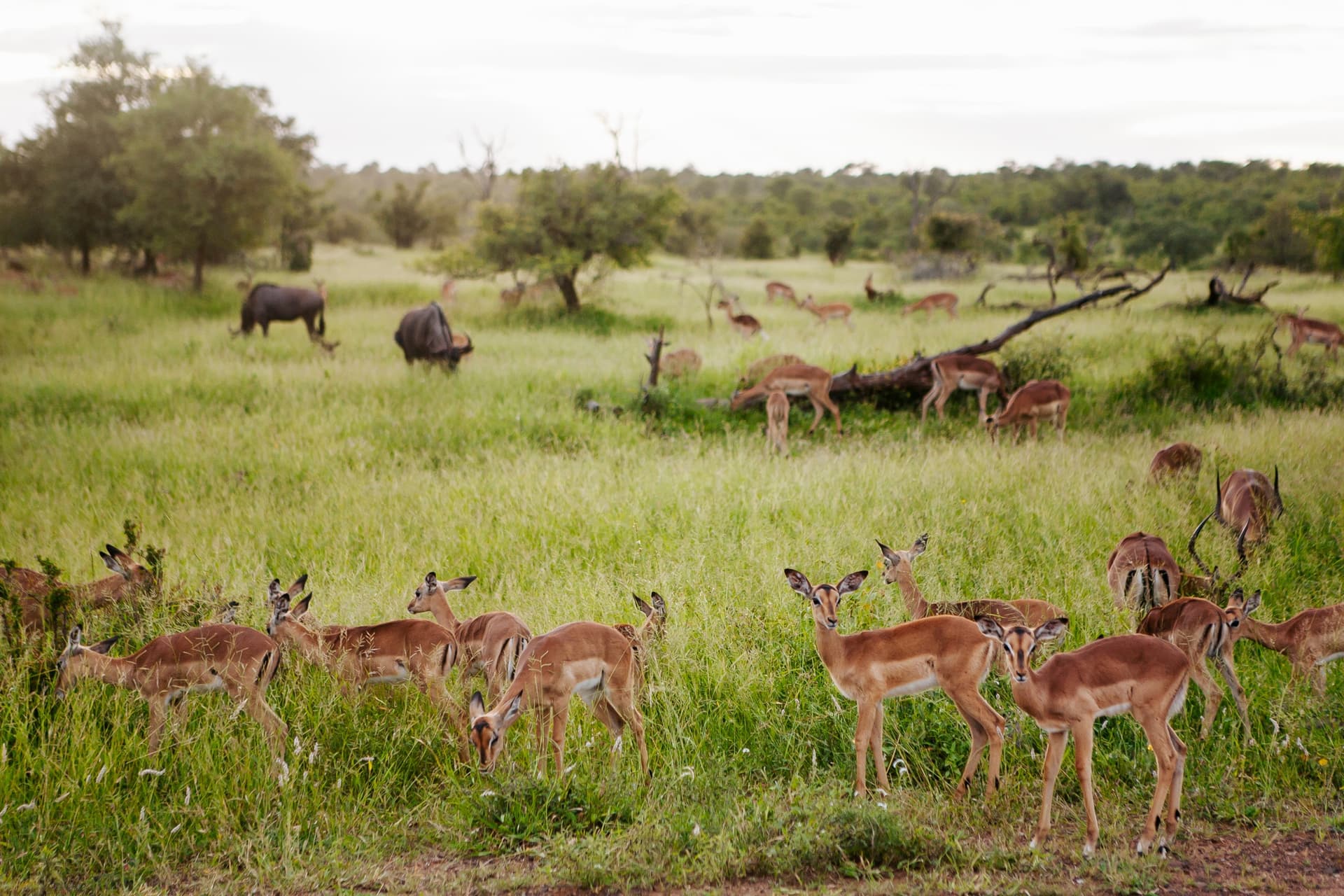
Blue wildebeest,
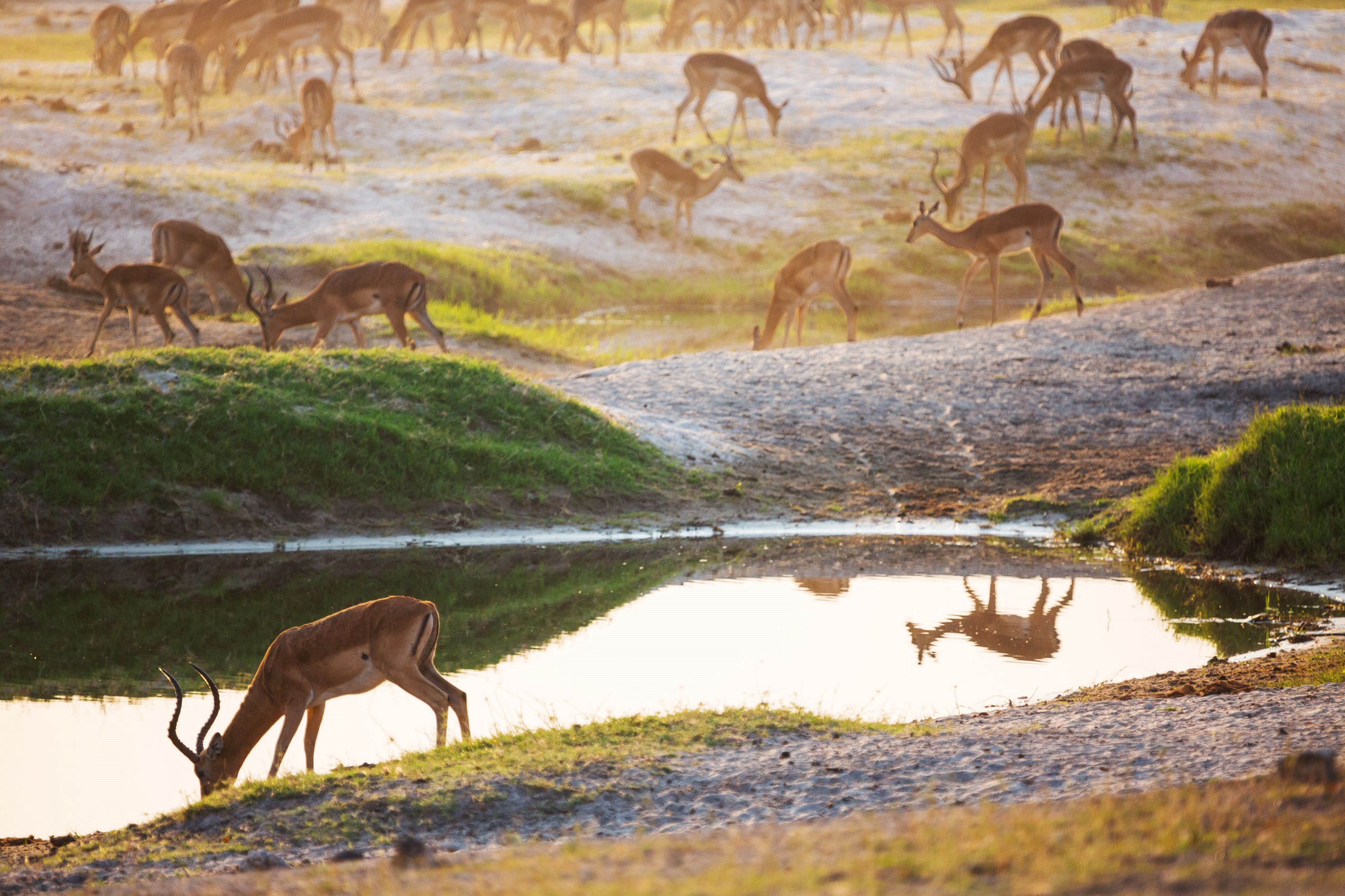
Antelopes,
Hippopotamuses,
Spotted hyenas...
The country also boasts rare species such as servals, African wild dogs, and caracals, as well as endemic species such as snow leopards, golden jackals, and L'Hoest's guenons.
Primates

You will also find several primate species such as :
Galagos,
Blue vervets,
Chacma baboons,
Yellow baboons,
Blue monkeys (Cercopithecus mitis),
Golden monkeys (Cercopithecus kandti).
Reptiles and amphibians

Finally, on the reptile and amphibian front, more than 300 species are recorded in the territory, including :
Nile crocodiles,
Boas,
Cobras,
Black mambas,
Green mambas,
Puff adders,
Boomslangs,
Savanna monitors,
Chameleons,
Lizard species (agamas, skinks...),
Freshwater turtles...
Where to go to see these animals in Mozambique?
To see Mozambique's terrestrial animals, the best thing to do is go on a wildlife safari. The best places for safari in Mozambique are:
Maputo Special Reserve ;
Zinave National Park ;
Gorongosa National Park ;
Limpopo National Park ;
Chimanimani National Park ;
Niassa Reserve ;
What is the best time to go on a safari in Mozambique?
The best time to go on a safari in Mozambique is mid-dry season, between the months of July and October. This is when water becomes scarce and animals gather around water points, making them easier to observe.
Mozambique's iconic birds

With more than 850 bird species recorded in its territory, Mozambique is one of Africa's premier destinations for birdwatching safaris. You will find both migratory and year-round resident species as well as rare endemic species. Among the birds to see during a stay in Mozambique, you can find :
Greater flamingos,
White storks,
Parrots,
Turacos,
Crowned hornbills,
South African ostriches,
African marabous,
Grey crowned cranes,
Spotted palm-thrushes,
Chirinda apalis,
Emerald-spotted wood doves,
Swynnerton's forest robins,
Northern red bishops,
Green-headed orioles,
Sacred ibises,
Monk vultures,
Montagu's harriers,
Martial eagles,
Osprey,
Secretary birds...
Where to go to see birds in Mozambique?
Among the best birdwatching sites in Mozambique, you will find:
Inhaca Island ;
Maputo Special Reserve ;
Gorongosa National Park ;
Mount Namuli ;
Njesi Plateau ;
Niassa Reserve...
What is the best time to see Mozambique's birds? Birds can be observed year-round in Mozambique. However, if you wish to see migratory bird species, we recommend planning a visit during the rainy season, between the months of November and April.
Marine animals to see in Mozambique

Bathed by the Indian Ocean, Mozambique is also known for its exceptional marine fauna. More than 1,200 species of fish and 400 species of coral are recorded there, making it one of Africa's finest diving destinations.
The country is, however, particularly renowned for being home to the giants of the seas: whales and numerous pelagic species. You can observe them from the coastline or during an offshore excursion. Closer to the shores, coral reefs also provide refuge to countless tropical fish.
Among the marine animals to discover in Mozambique, you can find:
Blue whales,
Humpback whales,
Cuvier's beaked whales,
Southern right whales,
Minke whales,
Blainville's beaked whales,
Common fin whales,
Sperm whales,
Pygmy sperm whales,
Orcas,
False killer whales,
Dugongs,
Whale sharks,
Manta rays,
Shark species: great white sharks, tiger sharks, bull sharks, shortfin mako sharks, blue sharks, Zambezi sharks, hammerhead sharks...
Dolphin species: bottlenose dolphins, spinner dolphins, humpbacked dolphins, Indo-Pacific humpbacked dolphins...
Turtle species: leatherback sea turtles, green sea turtles, hawksbill sea turtles, olive ridley turtles...
Ocean sunfish (Mola mola),
Brown fur seals,
Southern elephant seals...
Where to go to see marine animals in Mozambique?
The best diving spots in Mozambique and the best places to admire marine fauna are:
The Quirimbas Archipelago (for its reefs, tropical fish, and turtles) ;
The Bazaruto Archipelago (for observing pelagics, sharks, and dugongs) ;
Tofo (encounters with pelagics such as manta rays and whale sharks) ;
Zavora (to see sharks) ;
Ponta Da Ouro (to see sharks and dolphins, as well as turtle nesting sites) ;
To see humpback whales, head to the coast between Ponta d'Ouro and Inhambane or offshore from Pemba. As for dugongs, you can see them in Inhambane Bay and Angoche Bay, around Mozambique Island, Nacala, and in the waters of the Quirimbas and Bazaruto Archipelagos.
Did you know? Maputo Special Reserve offers the opportunity to see two of the planet's largest mammals in a single day: the elephant and the whale!
What is the best time to see whales and other marine creatures in Mozambique?
Dives and sea safaris can be carried out year-round. However, if you wish to see migratory whale species, such as humpback whales, it is better to plan a trip between the months of May and October. As for whale sharks, they are more present between October and May.
Are you dreaming of going on a wildlife safari in Mozambique? Would you like to encounter whales and other pelagic species, or perhaps go on a birdwatching safari? Choose one of our itineraries or contact us to create a custom-made journey based on your preferences and budget. In any case, we're sure of one thing: you're going to love discovering the wild riches of this country, still largely untouched by mass tourism...
Frequently asked questions
In Mozambique, you can observe the Big Five (lion, leopard, elephant, buffalo, rhinoceros), but also rare species such as African wild dogs, servals, and caracals. At sea, the country is renowned for its whales, whale sharks, dugongs, and manta rays.
The best time for a land safari in Mozambique is between July and October (dry season), when animals gather around water points. For humpback whales, prefer May through October, and for whale sharks, October through May.
Dugongs in Mozambique are mainly encountered in Inhambane Bay and Angoche Bay, around Mozambique Island, Nacala, and in the waters of the Bazaruto and Quirimbas Archipelagos.
Humpback whales can be observed between May and October along Mozambique's coastline, particularly between Ponta d'Ouro and Inhambane, as well as offshore from Pemba. Sea excursions are organized from these areas.
Yes, Mozambique is one of the world's finest destinations for swimming with whale sharks. They are particularly present between October and May, notably around Tofo, which is renowned worldwide for this experience.
Mozambique is home to more than 850 recorded bird species, making it an ideal destination for birdwatching safaris. You will find resident species, migratory species (November to April), and rare endemic species.